
Mary
Fra Angelico (1399-1455)
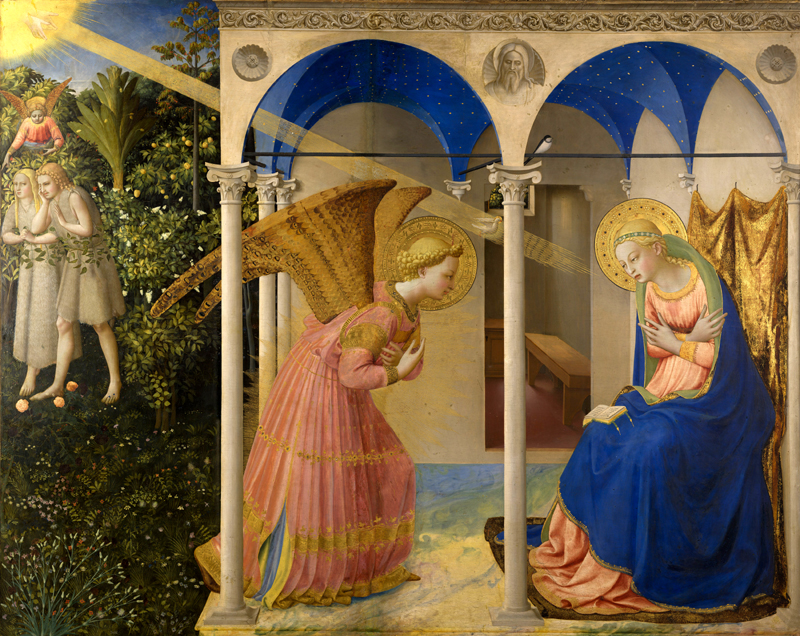
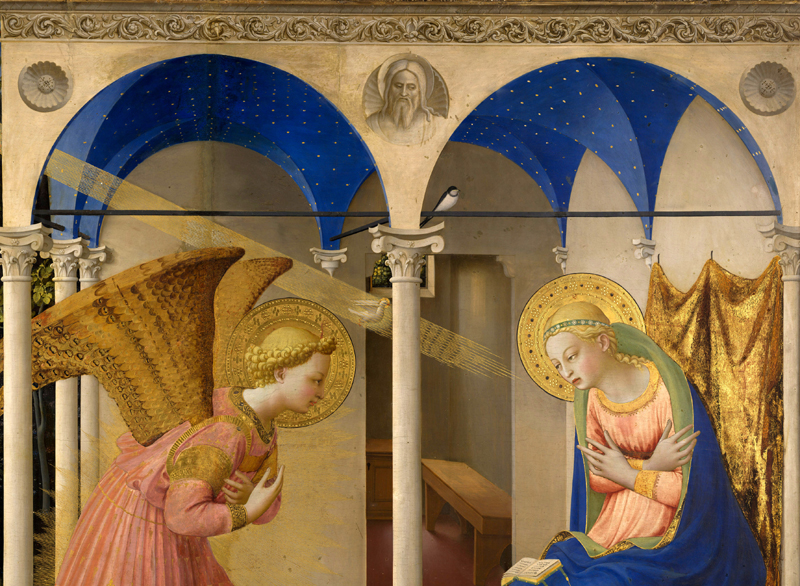
♦ De annunciation ♦ (Museo Diocesano, Cortona)
Of the four evangelists, only Luke describes the moment when Mary learns that she will become the mother of the Son of God. Her consent marks the beginning of God's plan to redeem humanity from the original sin committed by Adam and Eve through Jesus' incarnation, death, and resurrection.
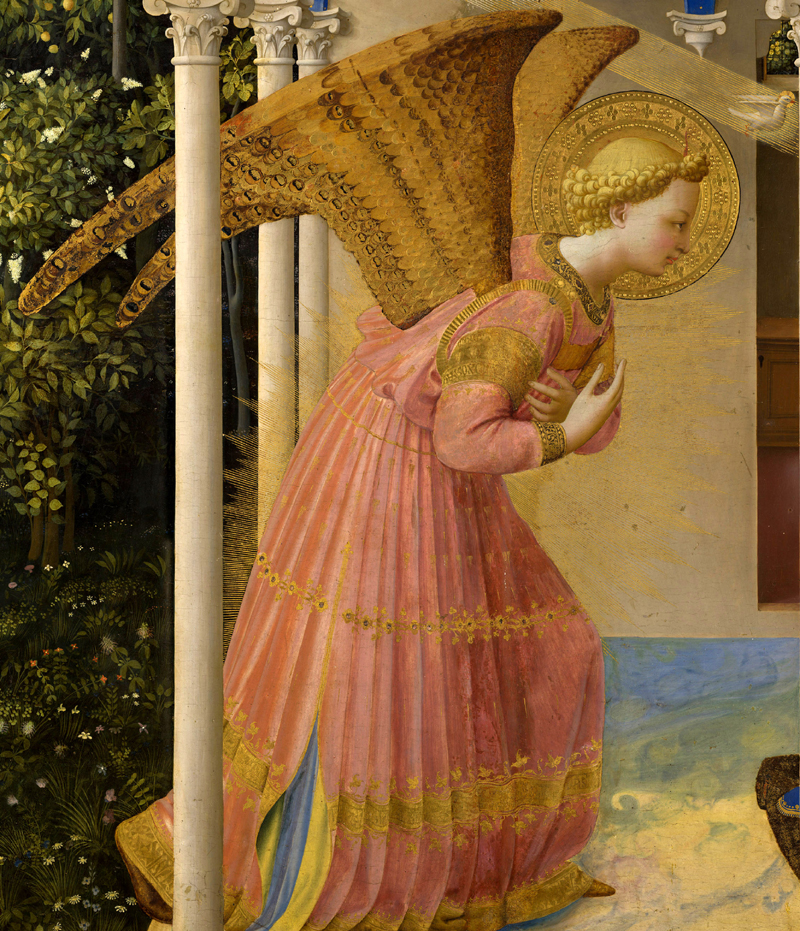
In the sixth month, God sent the angel Gabriel to the town of Nazareth in Galilee, to a girl who was betrothed to a man named Joseph, a descendant of David. The girl's name was Mary.
Gabriel entered her house and said, “Greetings, Mary, you are blessed, the Lord is with you.” She was greatly startled at his words and wondered what this greeting meant. But the angel said to her, "Do not be afraid, Mary, God has given you his favor.
Listen, you will conceive and bear a son, and you must name him Jesus. He will be a great man and will be called the Son of the Most High, and God, the Lord, will give him the throne of his father David.
He will reign over the people of Jacob forever, and his kingdom will have no end."
Mary asked the angel, how will this happen? After all, I have never had relations with a man. The angel replied, "The Holy Spirit will come upon you, and the power of the Most High will overshadow you. Therefore, the child to be born will be called holy, the Son of God. Listen, your relative Elizabeth is also pregnant with a son, despite her advanced age. Even though she was considered barren, she is now in her sixth month of pregnancy, for nothing is impossible with God.
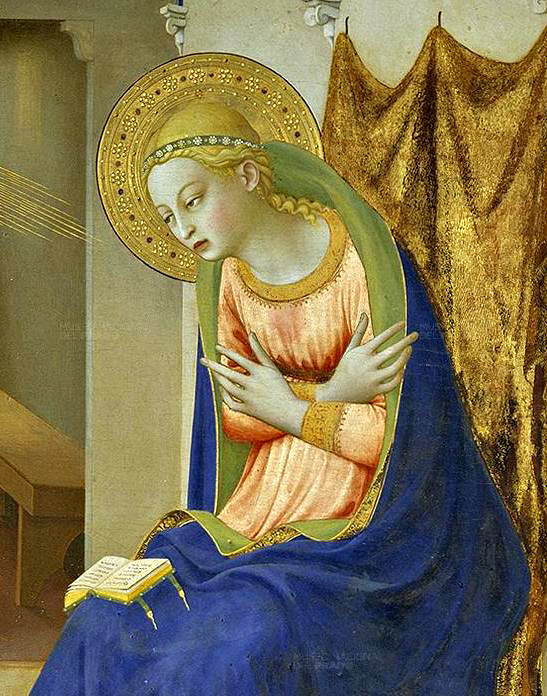
Mary said, “I will serve the Lord; let what you have said happen to me.” Then the angel left her alone. (Lucas 1:26-38)
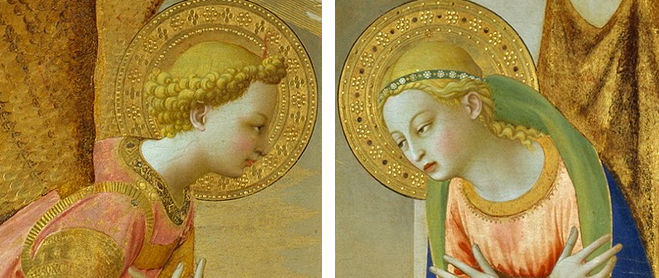
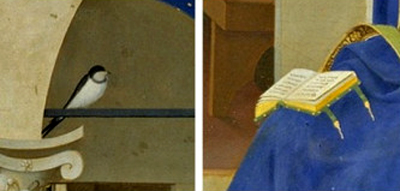
As is often the case in depictions of this theme by Italian painters, the event takes place in a loggia. The Gospel vaguely refers to ‘Mary's house’; the angel Gabriel has just arrived. Inscriptions between the angel and Mary (who has a prayer book on her lap) reflect the essence of the conversation we read about in Luke. Mary's posture, leaning towards the angel, her hands folded on her chest, testifies to her humble consent.
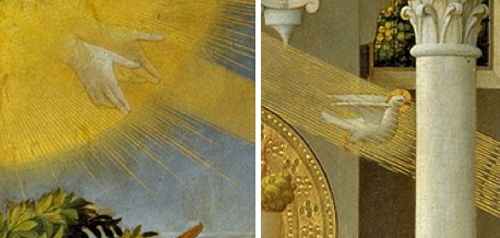
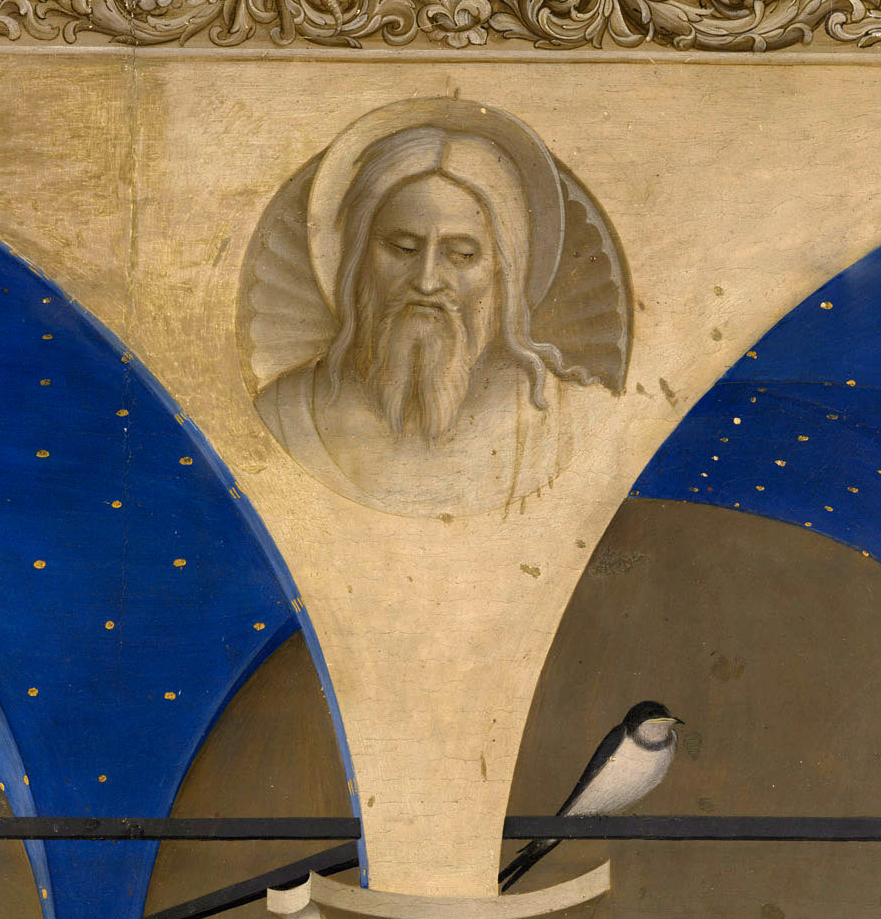
God, the source of light, sends down a dove. The bird symbolizes the Holy Spirit and penetrates the beam of light to reach Mary. Simultaneously with the announcement of Christ's coming, the spiritual conception of Mary—that is, the incarnation of Jesus—takes place. The image of God the Father himself is incorporated into the architecture like a medallion.
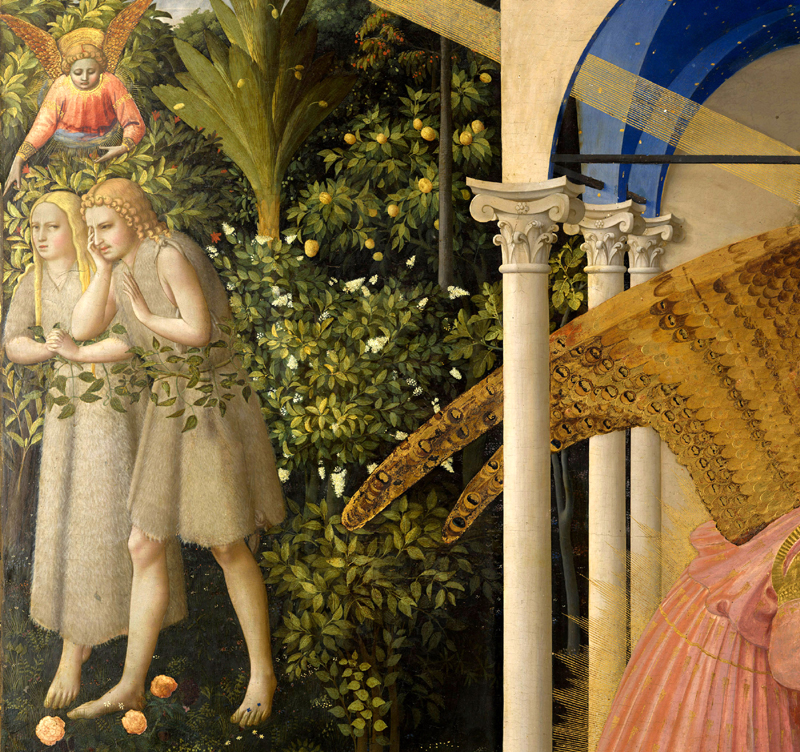
The coming of Christ, which is announced here, means for humanity the redemption from original sin, which Adam and Eve committed as the first humans and as a result of which they were expelled from the Garden of Eden.
At their feet lie forbidden fruits.
Fra Angelico brings the two scenes together here in a didactic manner. The broken Old Covenant between God and man is replaced by a New Covenant in the person of Jesus.
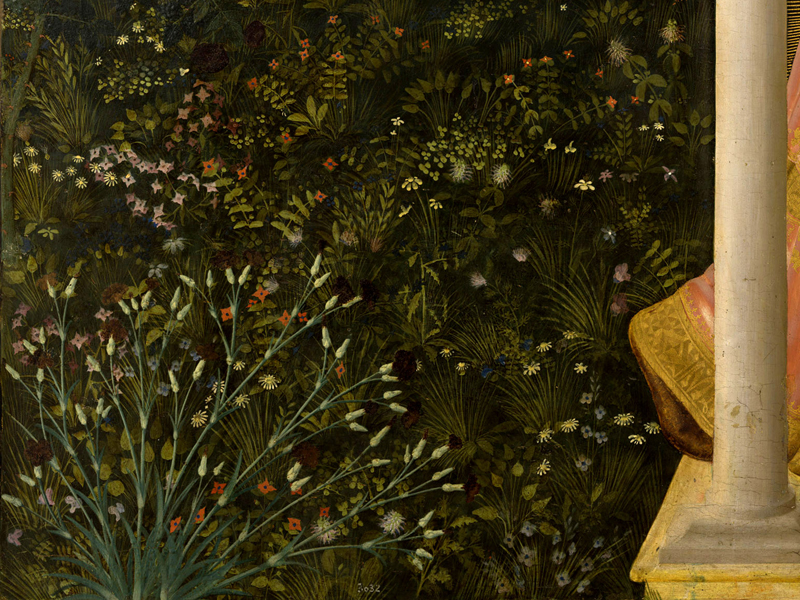
Many flowers were associated with Mary and were therefore used extensively in contexts such as the Annunciation. They are often depicted in a hortus conclusus (enclosed garden), which is itself a symbol of one of Mary's important characteristics, her purity, or, in other words, her virginity.
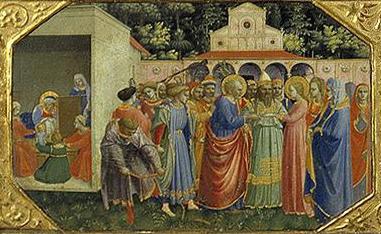
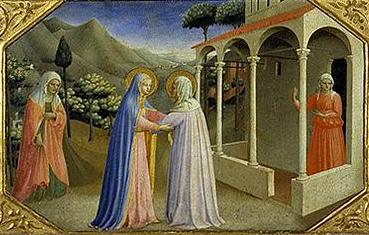
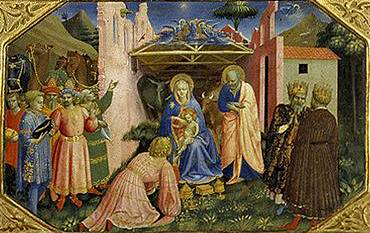
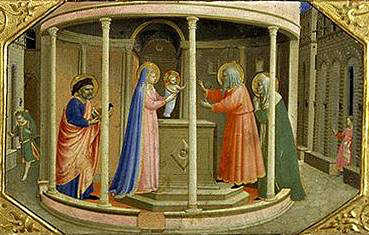
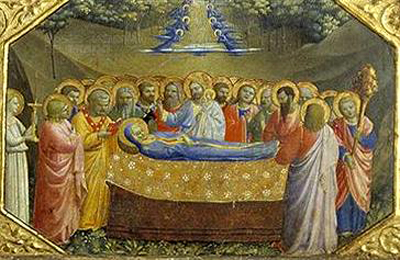
The five scenes depicted on the predella (pedestal) depict important moments in Mary's life: her birth and marriage, the Visitation, the meeting between Mary and her cousin Elizabeth, who was pregnant with John the Baptist, the adoration of Jesus by the three wise men or kings from the East, Mary's dedication or presentation in the temple, and Mary's death. We read nothing about Mary's birth, dedication, and death in the canonical Gospels, but we do in apocryphal texts.
Source: the art of seeing
Patrick de Rynck

Fra Angelico_Annunciation
References
De kunst van het kijken
Patrick de Rynck
Photos
wikipedia