

Piedro Longhi
November 5, 1701, Venice - May 8, 1785, Venice, Italy
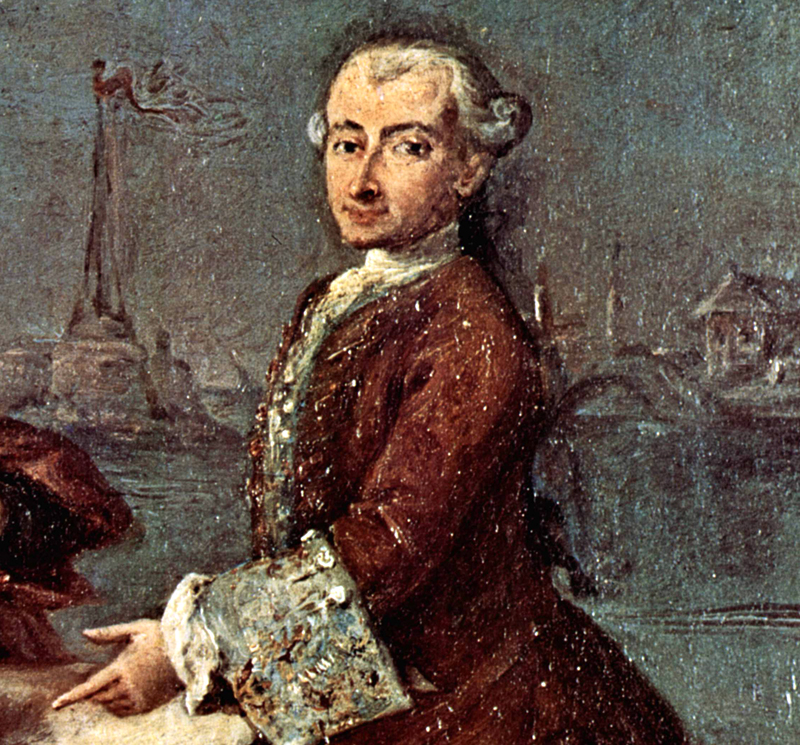
Piedro Longhi is an Italian genre painter who depicts his scenes as if on a theater stage, possibly because he was a close friend of playwright Carlo Goldoni.
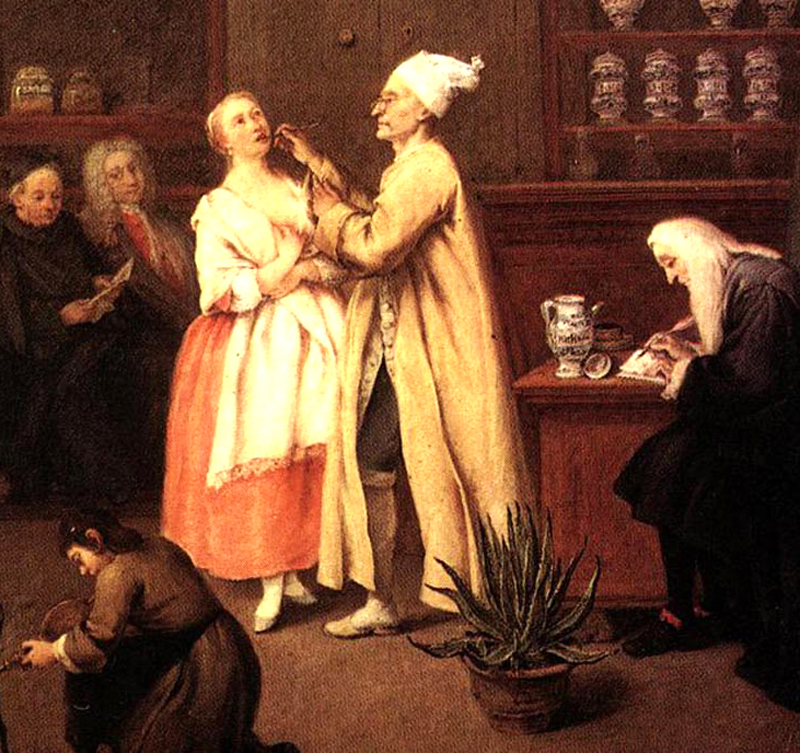
♦ The pharmacist ♦
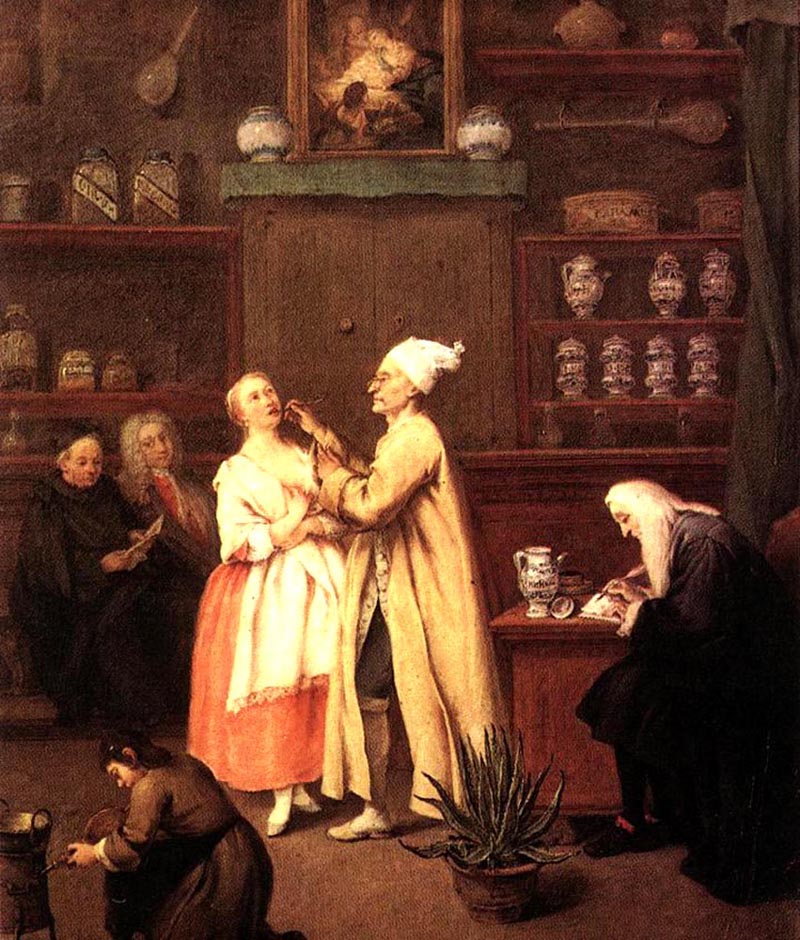
A young woman is being treated locally by a pharmacist in a typical 18th-century pharmacy.
Bottles, jars, glasses with reagents, mortars, and boxes fill the room.
An assistant is writing a prescription; two people are waiting to be served, and a young assistant is warming up a remedy.
The aloe plant refers to its healing properties as cleansing and blood-purifying.
♦ Diagnosis
Main symptoms: Local swelling and ulceration of the mucous membrane of the upper lip, use of antiseptic.
Secondary symptoms: Young working-class woman, low neckline, prostitute.
Clinical diagnosis: Hard chancre, syphilis.
♦ Definition: chancre
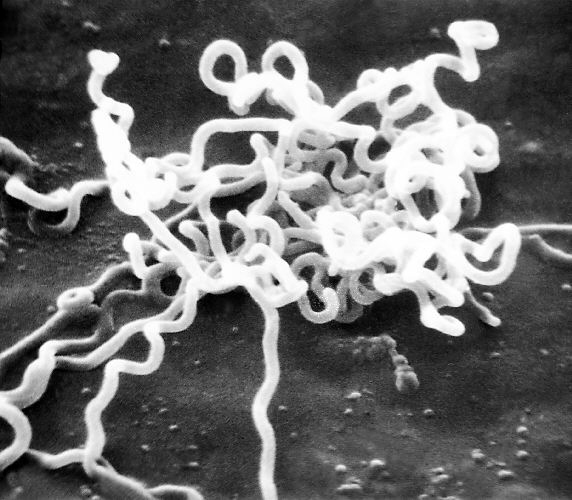
Wound that forms at the site of initial contact with the syphilis spirochete (Treponema pallidum), usually a hardened ulcer.
If not on the genitals, the primary syphilitic wound (chancre) will usually appear on the upper lip, although it can also occur on the eyelid.
♦ Discussion
Three major eras can be distinguished in syphilotherapy.
The first era is that of mercury (quicksilver).
During its use spanning more than 400 years (1493-1909), mercury likely did not cure a single syphilis patient and undoubtedly hastened the death of many.
Its therapeutic index is very low, and the 'curative' dose is close to the lethal dose.
The mechanism of its action against spirochetes is not yet known, but it is very likely that the mercury ions react with SH-activated enzymes of spirochetes that are essential for their viability.
In contrast to their ineffectiveness in the systemic treatment of syphilis, mercury preparations are highly suitable for topical use in the prevention of the disease.
The second era, 1909–1943, that of the antisyphilitic arsenics and bismuth, began when Ehrlich introduced arsphenamine, but ended soon after the discovery of the spirochete-killing effect of penicillin.
The 3rd era of syphilotherapy is that of antibiotics, particularly penicillin.
It was first used in 1943, has almost 100% effectiveness, and is moreover an easy and inexpensive therapy.
♦ Historical facts about syphilis
The nobleman Girolama (Hieronymus) Fracastorius of Verona, the first European epidemiologist (1483-1553), wrote the medical poem 'Syphilis sive morbus gallicas' ('Syphilis or the French Disease') in 1530, thereby putting a definitive end to the squabbling between many European countries (France, Spain, and Italy) that wanted to point the finger at each other as the country where the disease originated.
In his poem, Fracastorius named the mythical shepherd and hero Syphilus (susphilein meant swineherd) as the first sufferer of the disease. He had, after all, attacked Apollo and had been punished with syphilis for it. Thus, syphilis was said to originate from Syphilus, and the approximately 300 other claims from those days gradually fell into disuse.
Around the year 1500, the syphilis epidemic broke out in France, Germany, Switzerland, the Netherlands, Scotland, Hungary, and Russia.
With the help of the great voyages of the world undertaken during that era, the disease spread throughout the globe.
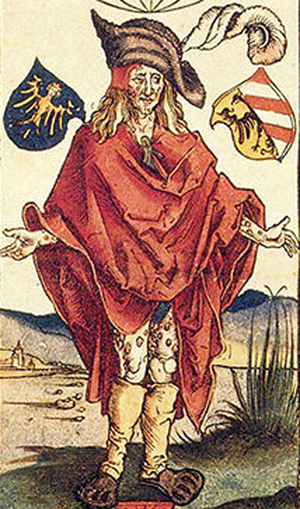
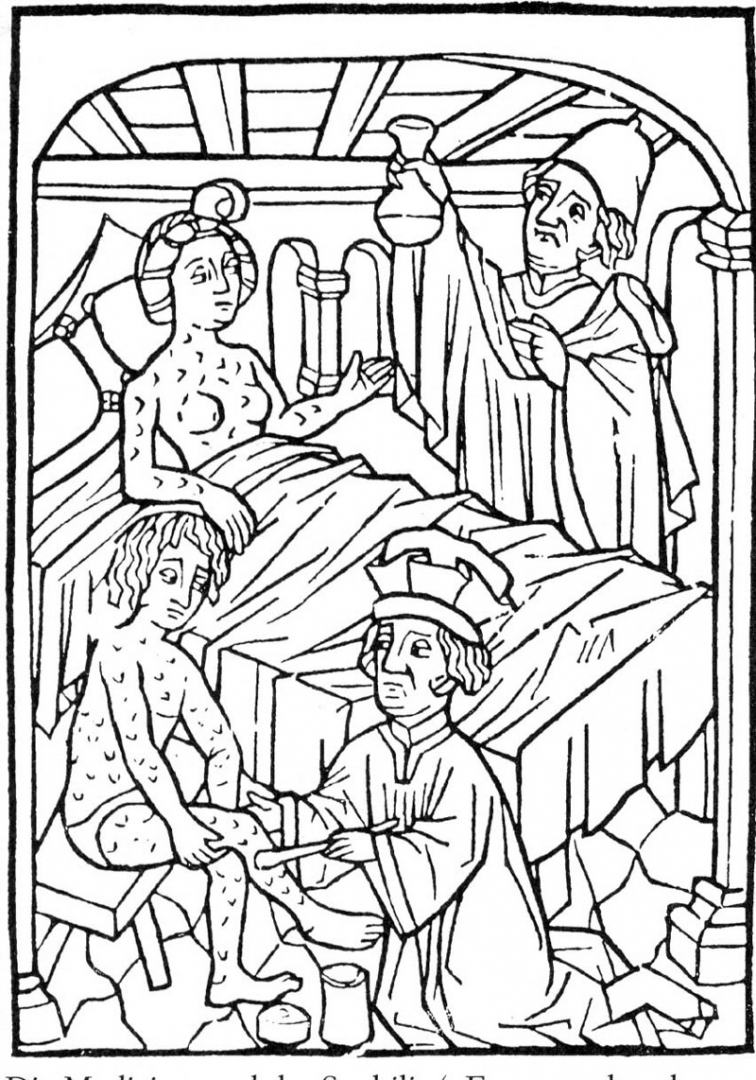
The oldest known image of syphilis, drawn by Albrecht Dürer, likely served as an advertisement for Ulsenius, the city doctor in Nuremberg. In verse, the latter wrote about the outbreak of the epidemic and the influence of the stars on it. Dürer provided a suitable drawing to accompany the doctor's poem.
In the upper part of the woodcut, one sees a globe with the signs of the zodiac: one star is in the sign of Aries, and several others in Scorpio.
It proves that a connection was made somewhere between syphilis and the position of the stars. The year 1484 on the globe does not refer to the year in which the print was made, but rather to a conjunction of a number of celestial bodies on St. Catherine's Day in 1484.
This configuration was interpreted by mathematicians of the time as a sign that a venereal epidemic would precede it.
Doctor Ulsenius's poem is important because it contains the very first known reference to the source of the infection.
The man with the cloak and the floppy hat shows the wounds the disease has made on the skin of his face, arms, legs, and palms.
Source: Jan Dequeker
Famous people with syphilis
Idi Amin - Al Capone - Paul Gaugin - Theo van Gogh - Hendrik VIII van Engeland - Vladimir Lenin - Edouard Manet - Guy de Maupassant - Friedrich Nietzsche - Franz Schubert - Jan Toorop - Henri Toulouse Lautrec - Willem III der Nederlanden

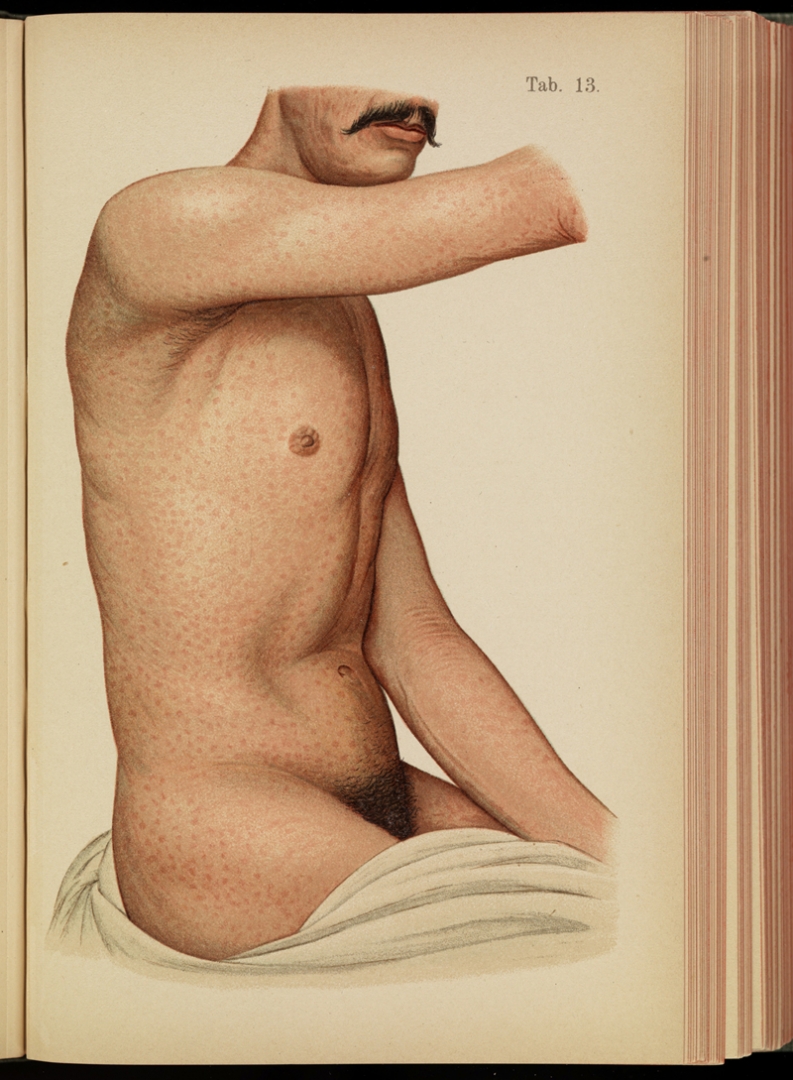
Syphilis (hard chancre)
References
Jan Dequeker
The artist and the doctor look at paintings.
Photos
wikiart.org
wikipedia.org
wikimedia.org
Art lijst
Schilderijen
- Bosch, Hieronymus – The Peddler
- Bosch, Hieronymus_The Haywain triptych
- Botticelli, Sandro_Primavera / Spring
- Brueghel the Elder, Pieter – The Tower of Babel
- Campin, Robert — Mérode Triptych
- Courbet, Gustave_The painters Studio
- Dali, Salvadore_The Temptation of Saint Anthony
- Dou, Gerard_the Quack Doctor
- Eyck van Barthélemy_Still life with books
- Fra Angelico_Annunciation
- Géricault, Théodore_Medusas raft
- Magritte, Rene_Prohibited to depict
- Matsys, Quinten_The money changer and his wife
- Memling, Hans_Two horses in a landscape
- Picasso, Pablo_Guernica
- Rembrandt_Abraham and the Three Angels
- Rembrandt_Elsje Christiaens
- Unknown – 16th century: Four depictions of a physician
- Velazquez, Diego_Las Meninas
Schilderijen en de dokter
- Agenesia Sacrale (a rare congenital disorder in which the fetal development of the lower spine)
- Alopecia areata (hair loss)
- Arthrogryposis congenita (birth defect, joints contracted)
- Artritis psoriatica (inflammatory disease of the joint)
- Artritis reumatoïde
- Breast development (delayed)
- Bubonic plague
- Dental caries
- Diphtheria
- Extraction of the Stone of Madness
- Eye surgery
- Flat foot and Pointed Foot
- Fungal disease_Favus
- Gigantism and Acromegaly
- Goiter (struma)
- Hare lip (cheiloschisis) / cleft palate
- Herpes zoster (shingles)
- Hunger edema
- Influenza Epidemic of 1858
- Insanity - Malle Babbe (1640)
- Leprosy
- Lovesick, pregnancy
- Lymph node tumor (lymphoma), non-Hodgkin
- Manic Depression Psychosis
- Measles / Rubella? (acute viral infection)
- Melanoma or nevus (birthmark)
- Membranous glomerulonephritis
- Murder (pneumothorax, arterial bleeding)
- Neurofibromatosis
- Osteoarthritis / hallux valgus
- Osteomyelitis
- Otitis media (acute middle ear infection)
- Parotitis (mumps)
- Polio
- Prepatellar bursitis
- Progeria
- Pseudohermafroditism
- Pseudopregnancy
- Psychoneurosis (acute)
- Pulmonary tuberculosis
- Rachitic chest
- Rheumatic fever (acute)
- Rhinophyma and rosacea_depression
- Rhinophyma or bulbous nose
- Rhinoscleroma
- Syphilis (hard chancre)
- Ziekte van Paget
Schilders
Historie lijst
- 1632-1723_Antonie van Leeuwenhoek
- 1749-1823_Edward Jenner
- 1818-1865_Ignaz Semmelweis
- 1822-1895_Louis Pasteur
Wetenswaardigheden lijst
- 1887 Psychiatric Hospital
- Animals on duty
- Bizarre advice for parents
- Bloodletting
- Bloodthirsty Hungarian Countess Elizabeth Báthory (1560–1614)
- Butler escaped punishment three times.
- Dance mania / Saint Vitus Dance
- Doctors’ advice did more harm than good
- French Revolution Louis XVI
- Frontal syndrome (Phineas Gage)
- Heart disease (Egyptian princess)
- Ice Age (minor)_1300-1850
- Ivan IV de Verschrikkelijke (1530-1584)
- Kindermishandeling
- Koketteren met koningin Victoria
- Koningin door huidcrème vergiftigd
- Kraambedpsychose (Margery Kempe)
- Massacre in Beirut
- ME stonden bol van de seks
- Mummie bij de dokter
- Plee, Gemak of Kakstoel
- Prostaatkanker (mummie)
- Sexhandel in Londen
- Swaddling baby
- Syfilis was in de mode
- Testikels opofferen
- Tropische ziekten werden veroveraars fataal
- Vrouwen als beul in WOII
- Wie mooi wil zijn moet pijn lijden
- Zonnekoning woonde in een zwijnenstal