.jpg)
Rembrandt van Rijn
July 15, 1606, Leiden - October 14, 1669, Amsterdam, Netherlands
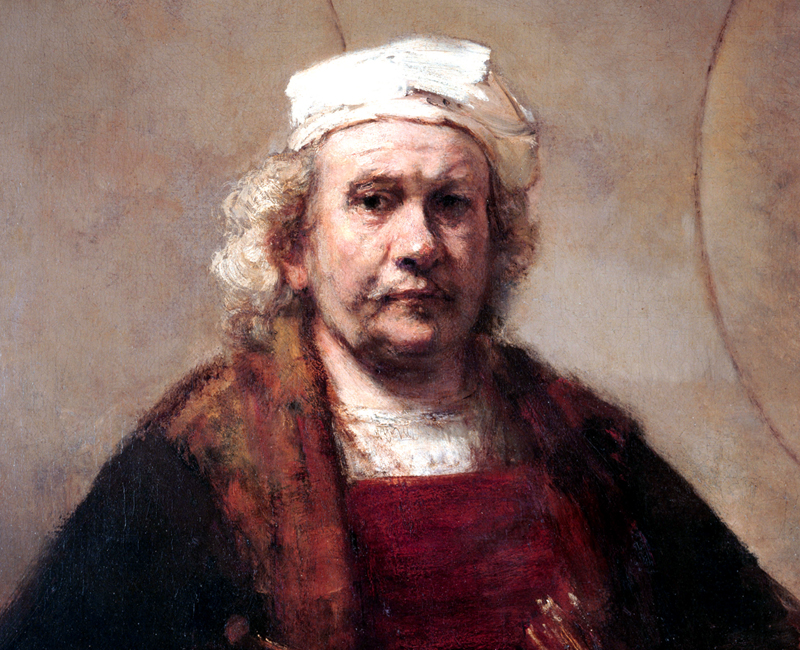
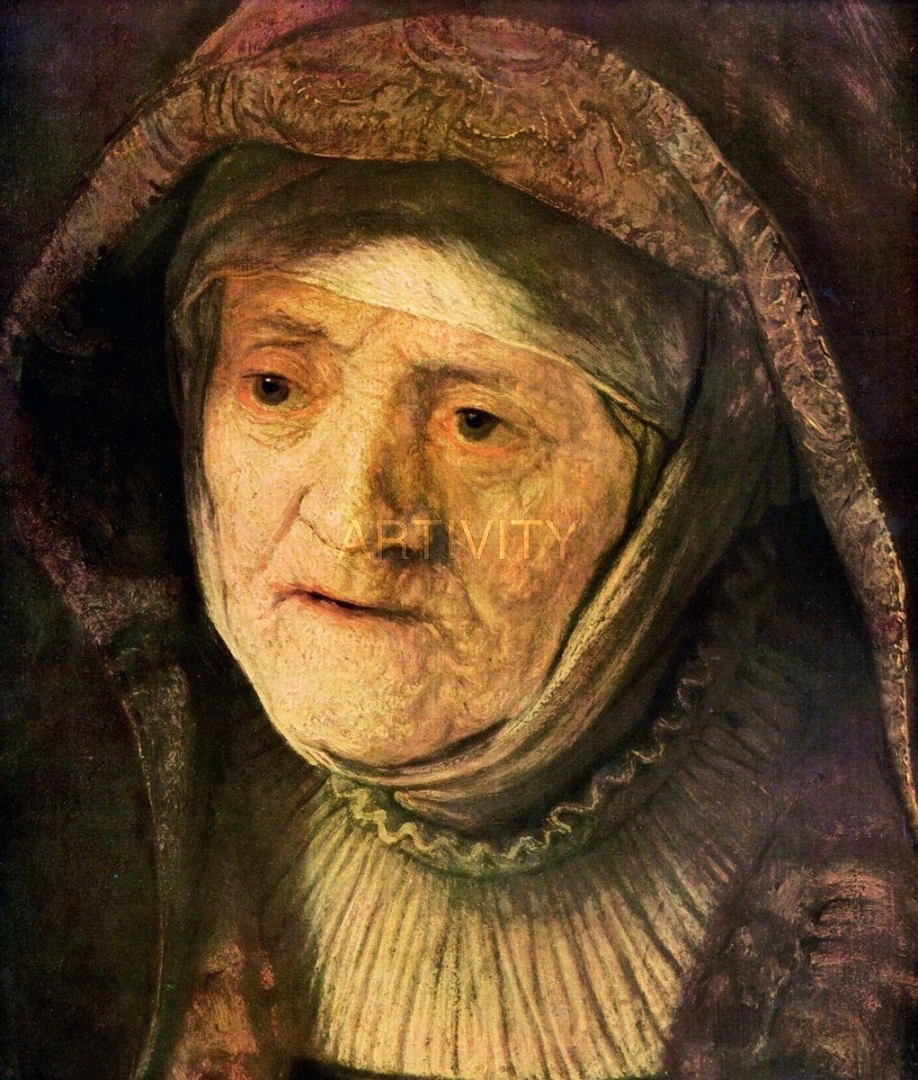
♦ Rembrandts mother 1639 ♦
Rembrandt painted his mother a year before she died.
She is leaning on a walking stick and wearing a Jewish prayer cap, representing the prophetess Anna, aged 84, as described in Luke 2:36-38:
'There was also a prophetess, Anna, the daughter of Phanuel, of the tribe of Asher.
She had lived a long life: after her maidenhood, she had lived with her husband for seven years and had been a widow for about 84 years. She never left the sanctuary, fasting and praying, worshipping God day and night. Now her hour was approaching.
She thanks God and speaks to all who await the redemption of Jerusalem.
♦ Diagnosis
Significant symptoms: Scar on the left side of the face, retracted lower eyelid on the left, atrophied jaw muscles, toothless mouth, bent posture of the head. (Pain?)
Secundary symptoms: 84-year-old woman, devout woman, richly dressed.ekleed.
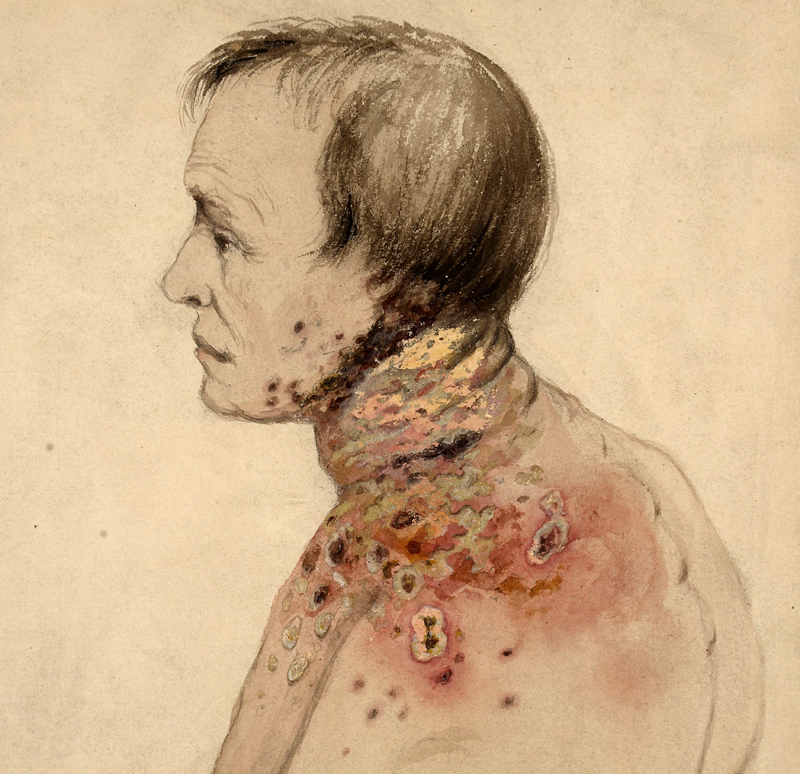
Clinical diagnosis: Herpes zoster (shingles), postherpetic neuralgia, torticollis (wry neck due to neck spasm).
♦ Definition: Herpes zoster (shingles)
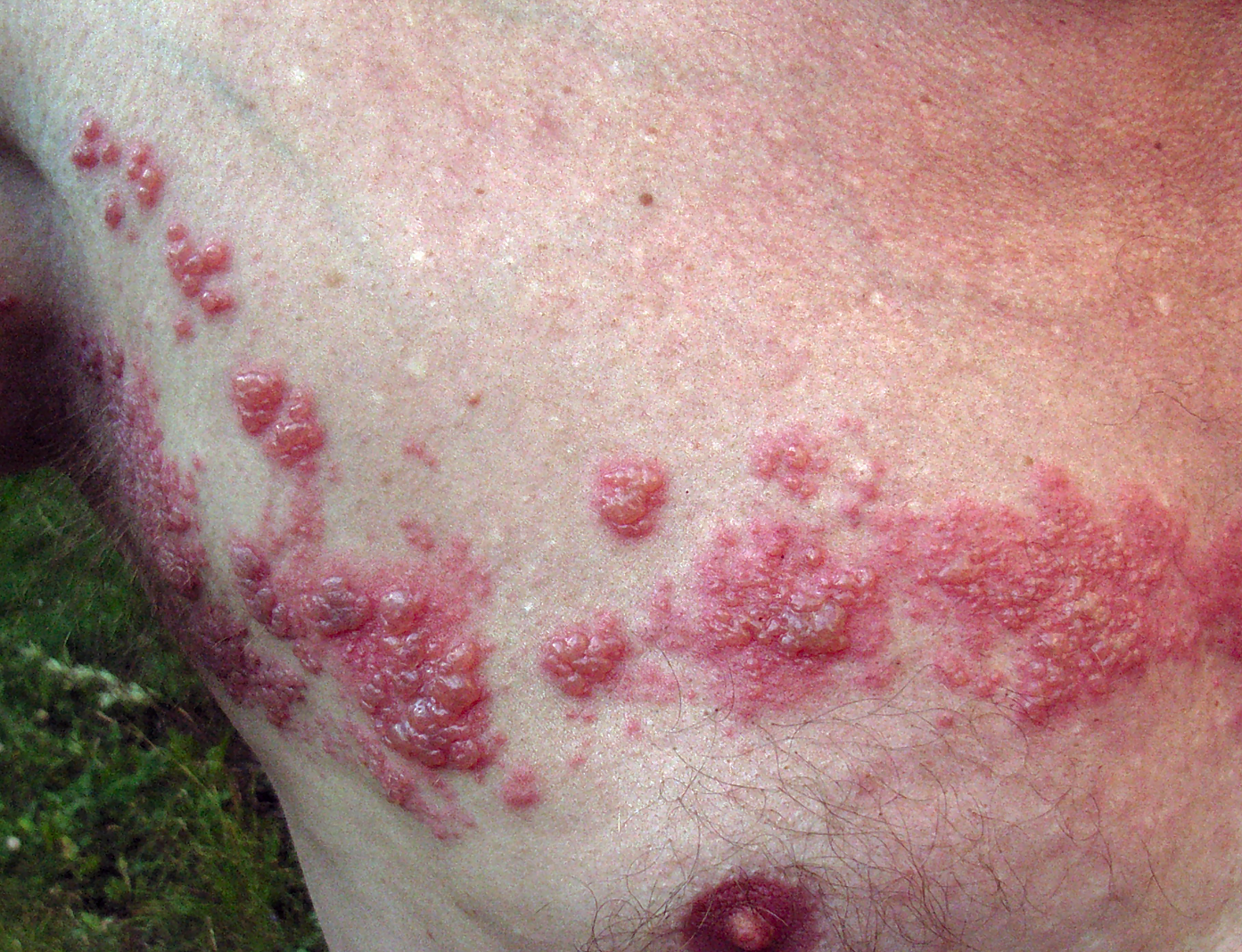
Herpes is an acute inflammation of the skin or mucous membrane, characterized by the development of a group of blisters on an inflamed area.
Herpes zoster is a type of herpes in which the lesions follow the course of a nerve.
As a rule, it only occurs on one side of the body. The disease usually breaks out along the line of an intercostal nerve, but in principle it can occur with any nerve.
The bursting of the vesicles is often preceded and may also be followed by severe nerve pain, known as postherpetic neuralgia.
It is a systemic infection caused by a virus.
It can be serious in elderly or frail individuals.
The disease is also known as shingles or (in Flanders) zona.
♦ Definition: torticollis
Tilted neck: a contraction of the sternocleidomastoid muscle, usually on one side, resulting in an abnormal position of the head.
♦ Discussion
Viral invasion of the posterior nerve ganglia causes pain, followed by a rash along the course of the affected nerve.
This is the same virus that causes varicella (chickenpox) and indicates a reactivation of a previous infection with the chickenpox virus that was dormant in the body.
Reactivation occurs when the immune response in the body is suppressed by another disease, by medications (such as corticosteroids and immunosuppressants), or by old age.
The pain of herpes zoster usually subsides as the rash clears up, but in rare cases, especially in older people, it can be followed by persistent postherpetic neuralgia that can last for months or even years.
Partial muscle wasting is relatively rare.
Source: Jan Dequeker

Herpes zoster (shingles)
References
Jan Dequeker
The artist and the doctor
Photos
Wikimedia.org
- Rembrandt's mother
https://artivity.gr/p/4148/portreto-miteras-remprant-1-leptomereia-remprant-harmensoon-pinakes
Art lijst
Schilderijen
- Bosch, Hieronymus – The Peddler
- Bosch, Hieronymus_The Haywain triptych
- Botticelli, Sandro_Primavera / Spring
- Brueghel the Elder, Pieter – The Tower of Babel
- Campin, Robert — Mérode Triptych
- Courbet, Gustave_The painters Studio
- Dali, Salvadore_The Temptation of Saint Anthony
- Dou, Gerard_the Quack Doctor
- Eyck van Barthélemy_Still life with books
- Fra Angelico_Annunciation
- Géricault, Théodore_Medusas raft
- Magritte, Rene_Prohibited to depict
- Matsys, Quinten_The money changer and his wife
- Memling, Hans_Two horses in a landscape
- Picasso, Pablo_Guernica
- Rembrandt_Abraham and the Three Angels
- Rembrandt_Elsje Christiaens
- Unknown – 16th century: Four depictions of a physician
- Velazquez, Diego_Las Meninas
Schilderijen en de dokter
- Agenesia Sacrale (a rare congenital disorder in which the fetal development of the lower spine)
- Alopecia areata (hair loss)
- Arthrogryposis congenita (birth defect, joints contracted)
- Artritis psoriatica (inflammatory disease of the joint)
- Artritis reumatoïde
- Breast development (delayed)
- Bubonic plague
- Dental caries
- Diphtheria
- Extraction of the Stone of Madness
- Eye surgery
- Flat foot and Pointed Foot
- Fungal disease_Favus
- Gigantism and Acromegaly
- Goiter (struma)
- Hare lip (cheiloschisis) / cleft palate
- Herpes zoster (shingles)
- Hunger edema
- Influenza Epidemic of 1858
- Insanity - Malle Babbe (1640)
- Leprosy
- Lovesick, pregnancy
- Lymph node tumor (lymphoma), non-Hodgkin
- Manic Depression Psychosis
- Measles / Rubella? (acute viral infection)
- Melanoma or nevus (birthmark)
- Membranous glomerulonephritis
- Murder (pneumothorax, arterial bleeding)
- Neurofibromatosis
- Osteoarthritis / hallux valgus
- Osteomyelitis
- Otitis media (acute middle ear infection)
- Parotitis (mumps)
- Polio
- Prepatellar bursitis
- Progeria
- Pseudohermafroditism
- Pseudopregnancy
- Psychoneurosis (acute)
- Pulmonary tuberculosis
- Rachitic chest
- Rheumatic fever (acute)
- Rhinophyma and rosacea_depression
- Rhinophyma or bulbous nose
- Rhinoscleroma
- Syphilis (hard chancre)
- Ziekte van Paget
Schilders
Historie lijst
- 1632-1723_Antonie van Leeuwenhoek
- 1749-1823_Edward Jenner
- 1818-1865_Ignaz Semmelweis
- 1822-1895_Louis Pasteur
Wetenswaardigheden lijst
- 1887 Psychiatric Hospital
- Animals on duty
- Bizarre advice for parents
- Bloodletting
- Bloodthirsty Hungarian Countess Elizabeth Báthory (1560–1614)
- Butler escaped punishment three times.
- Dance mania / Saint Vitus Dance
- Doctors’ advice did more harm than good
- French Revolution Louis XVI
- Frontal syndrome (Phineas Gage)
- Heart disease (Egyptian princess)
- Ice Age (minor)_1300-1850
- Ivan IV de Verschrikkelijke (1530-1584)
- Kindermishandeling
- Koketteren met koningin Victoria
- Koningin door huidcrème vergiftigd
- Kraambedpsychose (Margery Kempe)
- Massacre in Beirut
- ME stonden bol van de seks
- Mummie bij de dokter
- Plee, Gemak of Kakstoel
- Prostaatkanker (mummie)
- Sexhandel in Londen
- Swaddling baby
- Syfilis was in de mode
- Testikels opofferen
- Tropische ziekten werden veroveraars fataal
- Vrouwen als beul in WOII
- Wie mooi wil zijn moet pijn lijden
- Zonnekoning woonde in een zwijnenstal