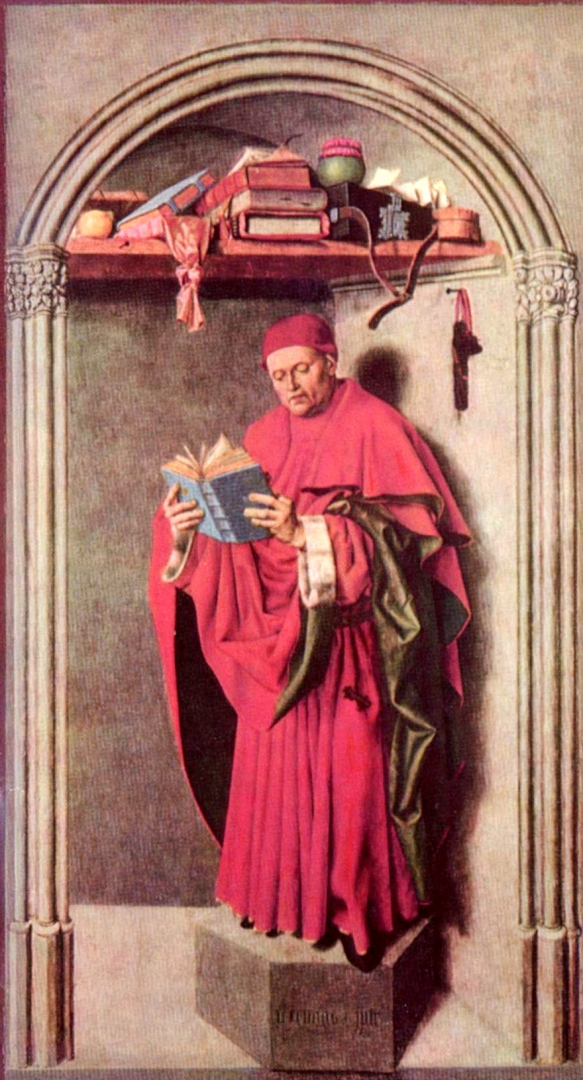
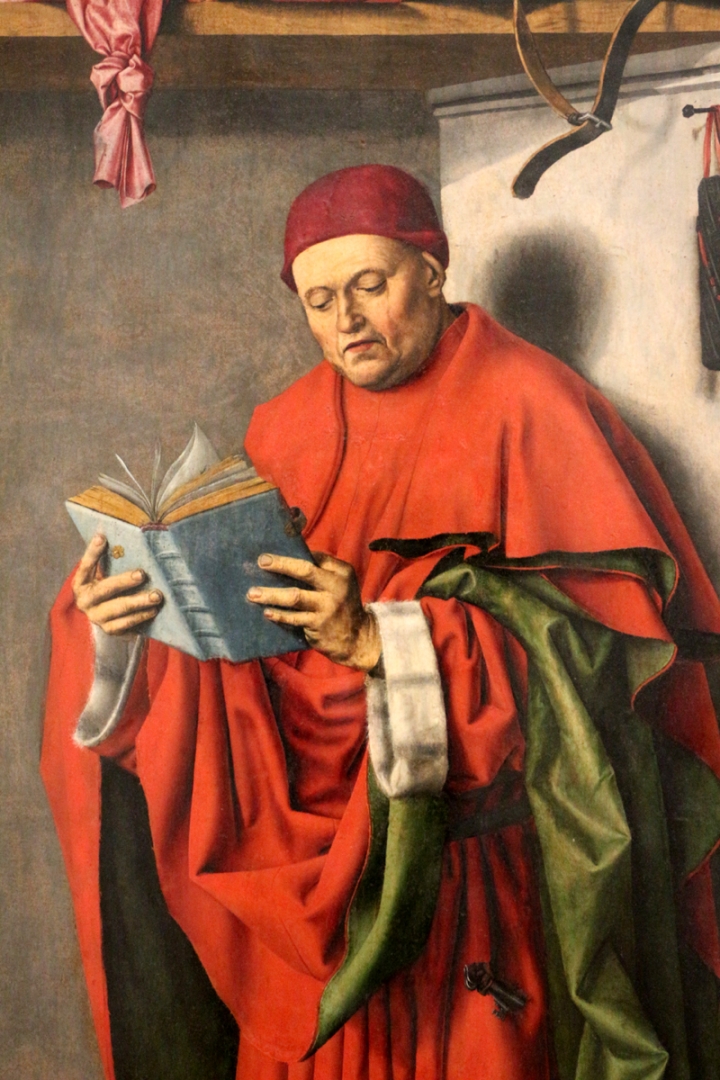
Stilleven met boeken & the prophet Isaiah
Barthélemy van Eyck, 1420-1470
ca.1445 / Boijmans van Beuningen
♦ Description
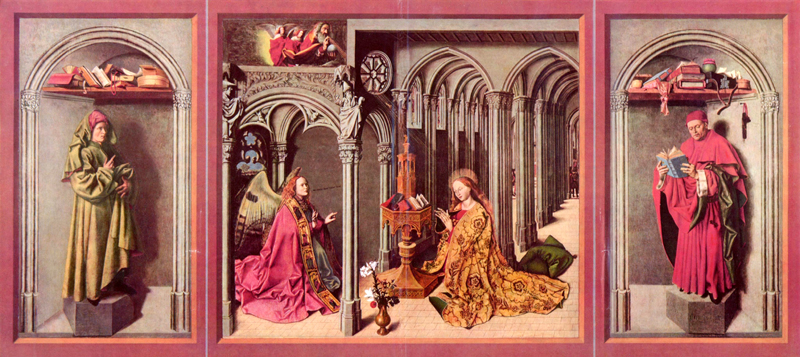
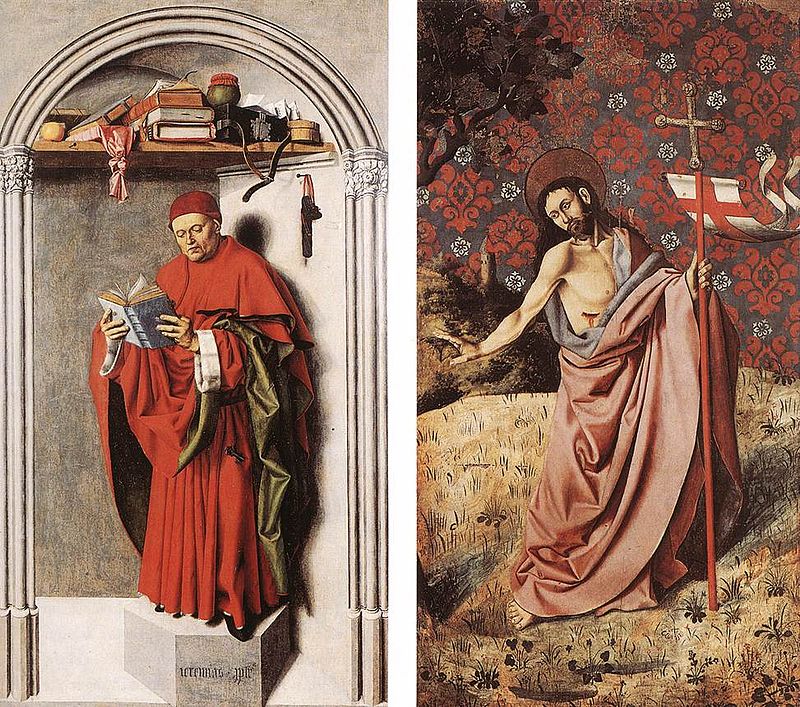
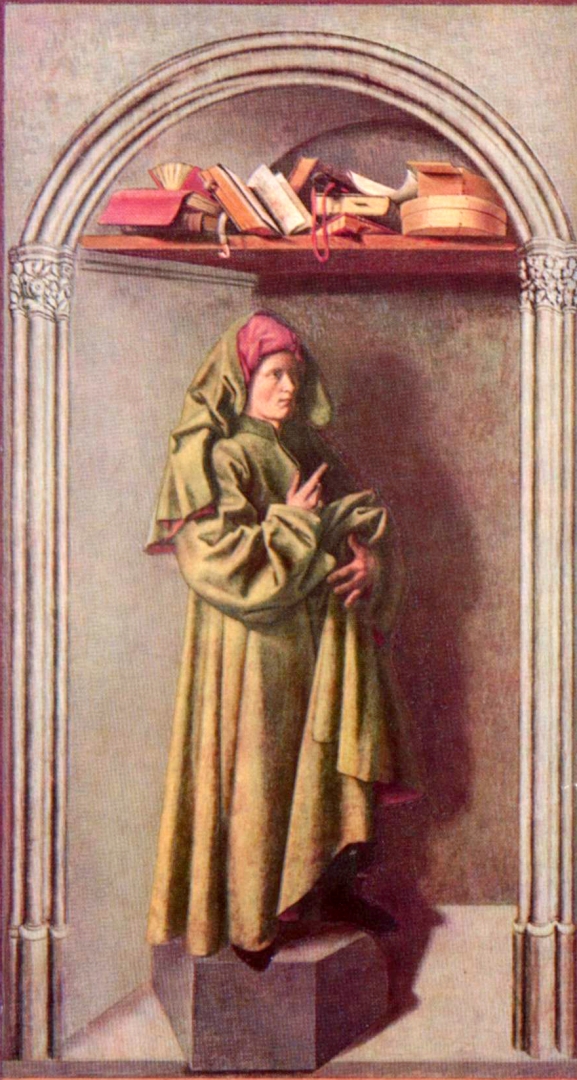
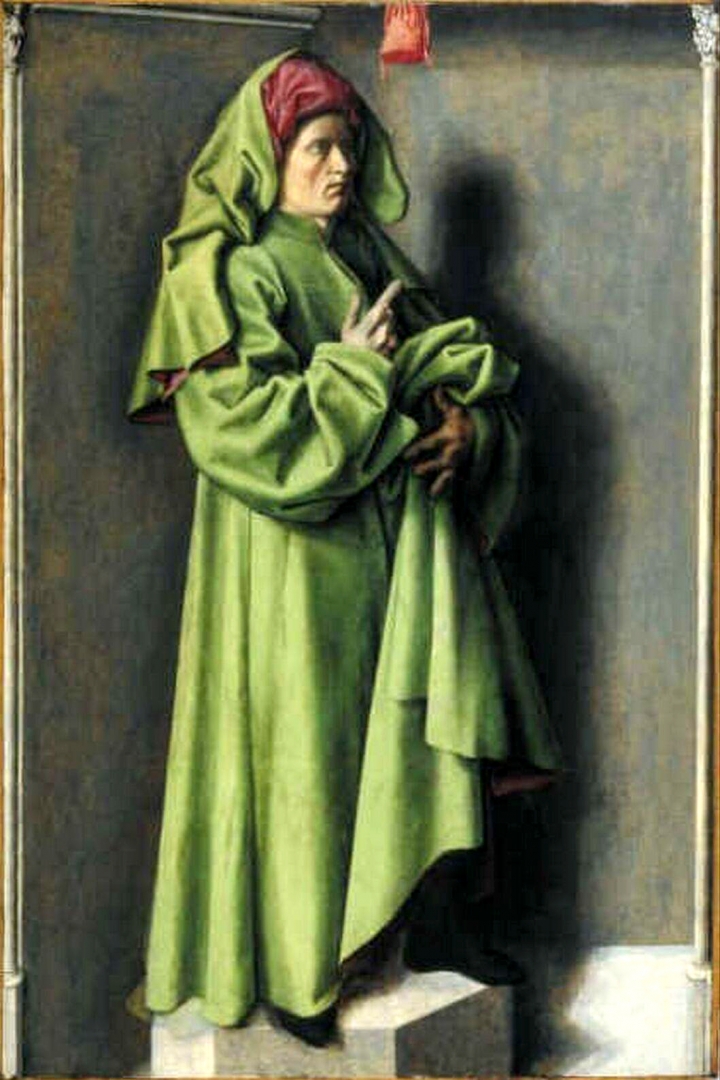
This depiction of the prophet Isaiah was once part of a triptych in the cathedral of the southern French city of Aix-en-Provence. The central panel still hangs in the church there.
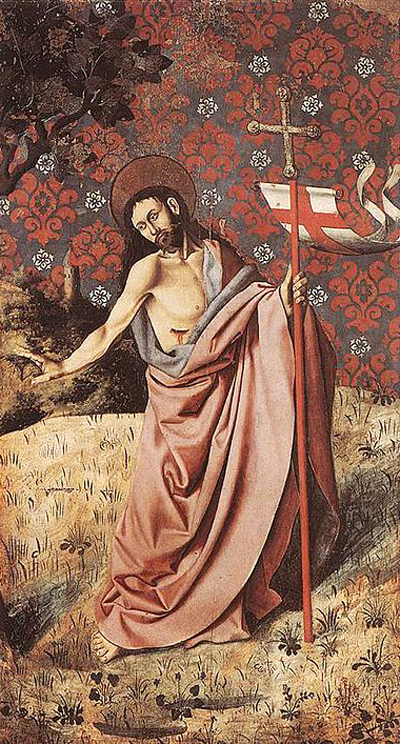
The right panel, depicting the prophet Jeremiah, is in the Museum of Fine Arts in Brussels.
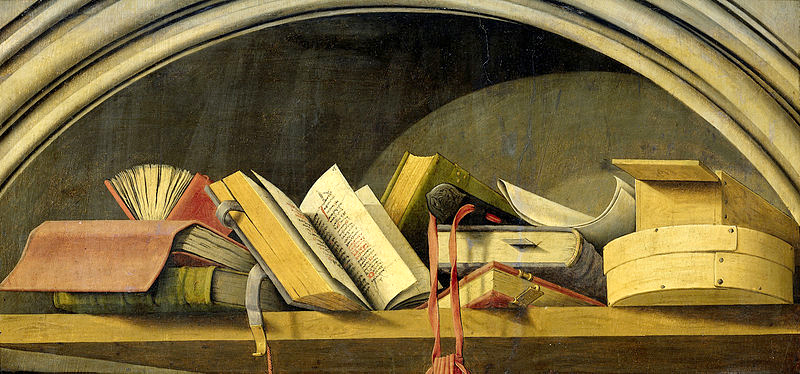
The still life with books and wooden boxes was sawed off the top of this Isaiah painting by an art dealer in the 19th century. This still life is now in the Rijksmuseum.
Over the centuries, paintings have often been treated with little care. Iconoclasm, revolutions, but also ever-changing tastes or simple indifference have left their mark.
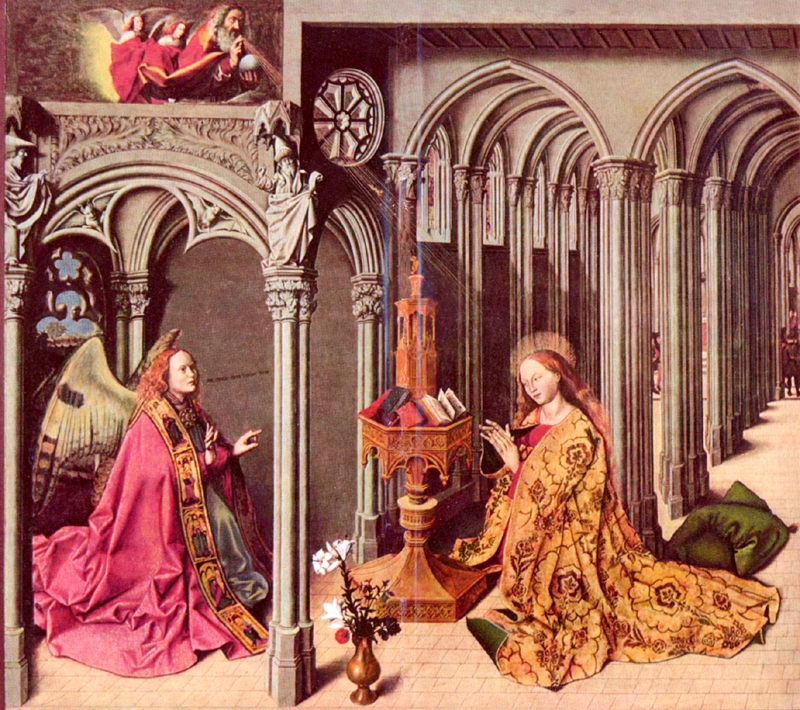
These two panels by Barthélemy d’Eyck, now considered one of the highlights of 15th-century French painting, are a good example of this. They were painted between 1442 and 1445 on commission from a wealthy cloth merchant and were part of a large triptych in Saint-Sauveur Cathedral in Aix-en-Provence.
The altarpiece was probably dismantled during the French Revolution.
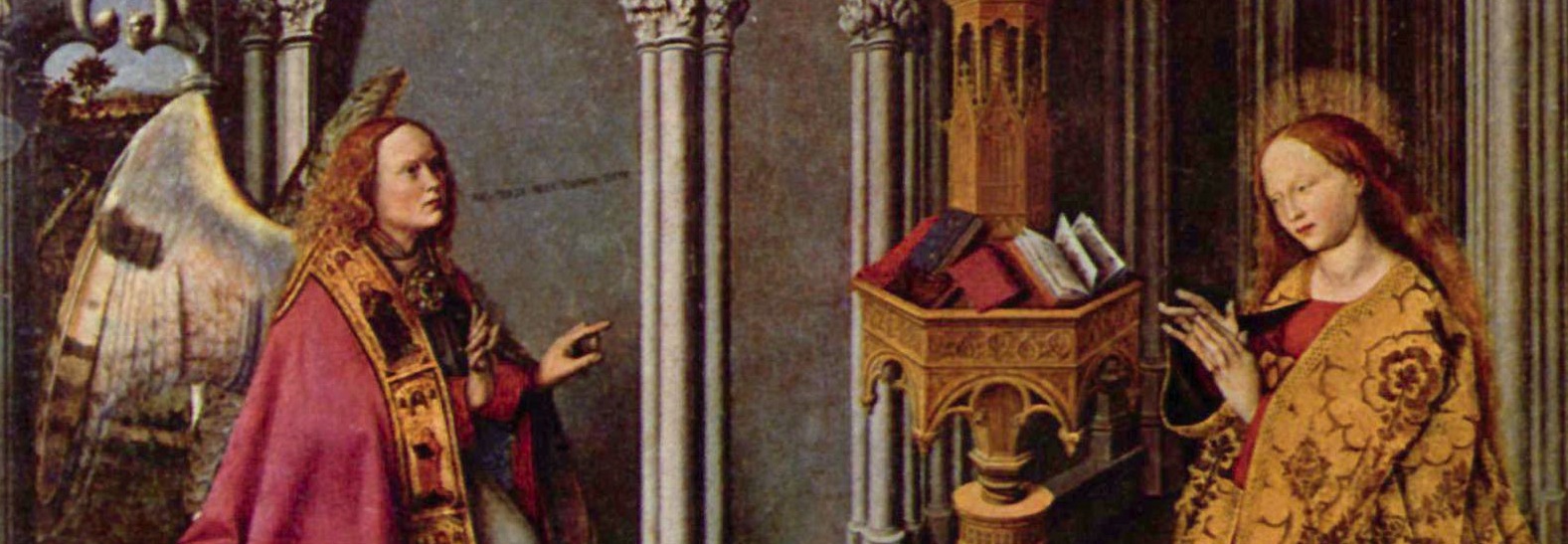
The central panel depicting the Annunciation still hangs in the southern French city.
The right panel depicting the prophet Jeremiah is in the Royal Museums of Fine Arts in Brussels. Later still, some scoundrel sawed off the beautiful book still life, which was originally painted in a niche above Isaiah, and sold it separately. The still life eventually ended up in the Rijksmuseum, which gave it on long-term loan to Museum Boijmans van Beuningen, so that the top and bottom of the left panel are now together again.
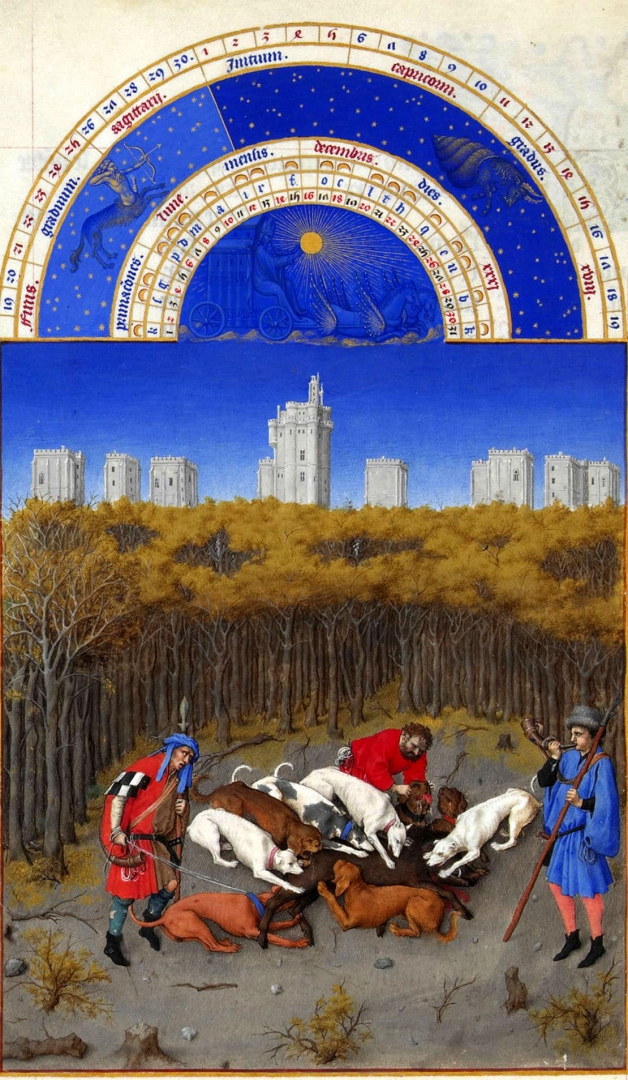
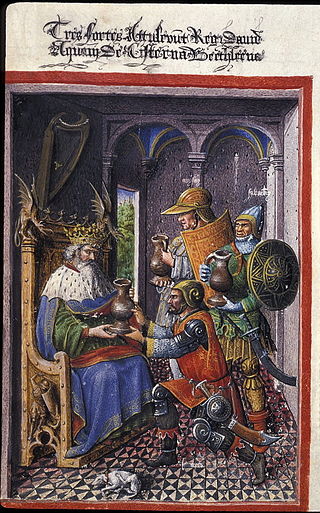
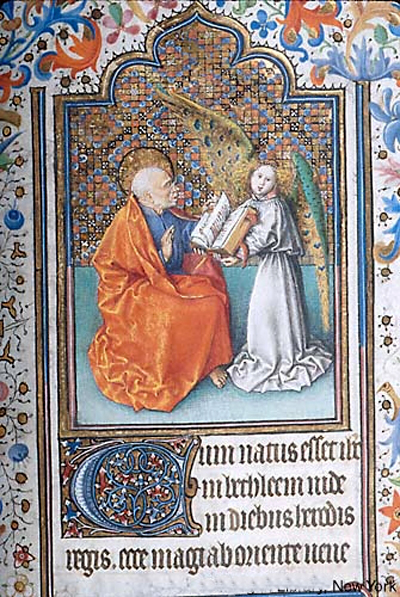
The painter may have been related to Jan van Eyck. He produced a number of illuminated manuscripts for René d'Anjou, King of Naples and Count of Provence. The triptych is the only painting that can be attributed to him with certainty.
Erik Beenker / Boijmans van Beuningen
De Collectie
Barthélemy van Eyck
Was a miniaturist and painter from the Dutch-speaking part of the Prince-Bishopric of Liège who worked mainly in France in Anjou and Provence in the service of René I of Anjou.
He was active between 1444 and 1470. None of his works have been documented, but art historians have attributed several works by previously anonymous masters to him.
♦ Biography
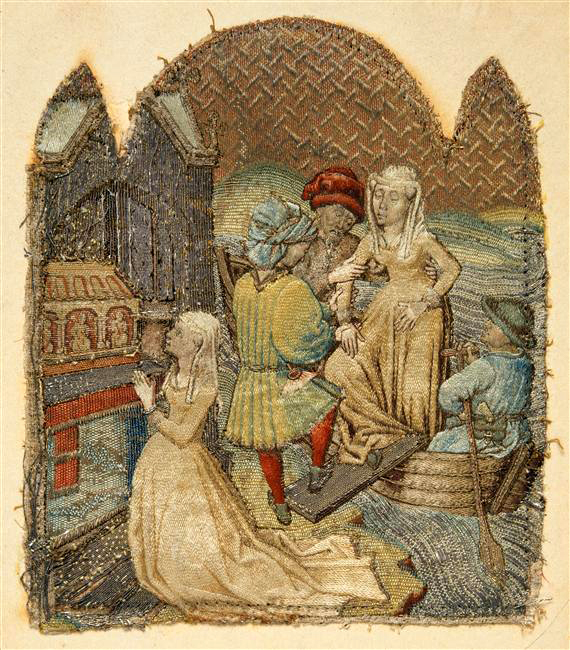
Little or no biographical information is known about this artist, but we do know that Barthélemy was the son of Ydria Exters, originally from Maaseik, whose second husband was named Pierre du Billant, a French version of ‘Van Bylant’. Billant had been working in Aix-en-Provence since 1440 as a painter and embroiderer for René d’Anjou.
From 1447 to 1467, René d'Anjou's accounts show regular payments to Barthélemy van Eyck, and according to Smeyers, he had already stayed with René d'Anjou in Naples between 1438 and 1442.
Barthélemy must have been highly favored by René d'Anjou, because the duke had workshops with special furniture installed for Barthélemy in several of his castles and residences, close to his own apartments.
From the previous section, we learn that he was still alive in 1472, but he must have died shortly thereafter, between 1475 and 1480, because in a letter from that period to Jehanne de la Forest, the painter's widow, René asks her to send him the pourtraistures de feu Berthelemy that had remained in her possession. It is not known which works these were, but pourtraistures referred to drawings, and it certainly attests to works created by Barthélemy and indicates that he had died by then.
♦ Style
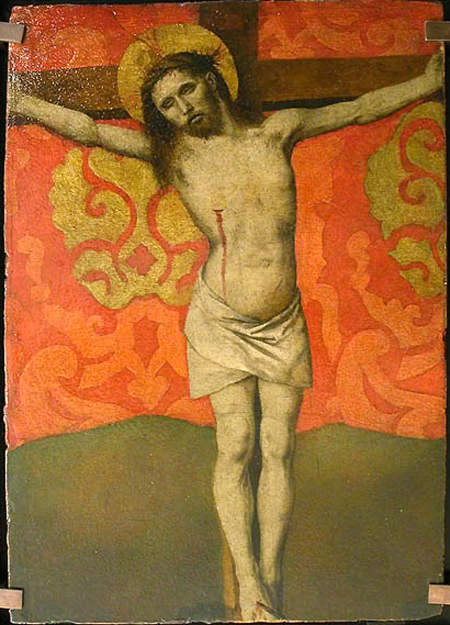
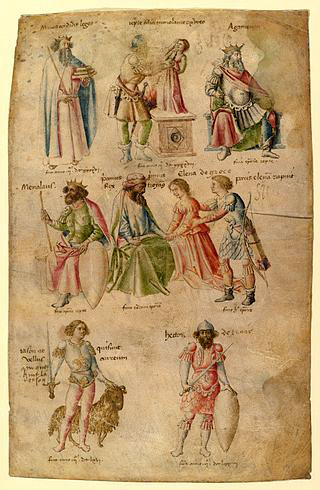
As mentioned above, no work can be attributed to Barthélemy van Eyck on the basis of historical documents, but since the 1980s, a consensus has gradually grown among art historians regarding the attribution of a number of works previously linked to Barthélemy van Eyck under provisional names. The names previously used included the ‘Master of René of Anjou’, the ‘Master of the Annunciation of Aix’, the ‘Master of Shadows’ and the ‘Master of the Coeur d'Amour épris’. Some art historians attributed certain works to the duke himself, but this view has since been abandoned.
His style shows a connection with the painting style of the Flemish Primitives, and some art historians believe they can detect the influence of Robert Campin, alias the Master of Flémalle, in his work.
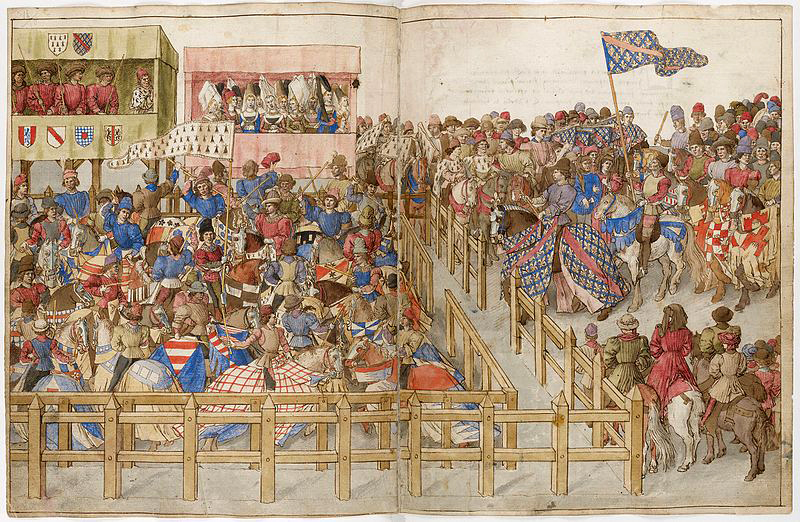
Others see the influence of Jan van Eyck in his work, and family ties with the Van Eyck brothers are sometimes suggested, although this cannot be proven. His interest in light, chiaroscuro, and the rendering of shadows is typical of the master. His characters are stocky but powerfully built and realistic in their postures and actions, and the sideways glance that occurs very frequently is characteristic. He is a master at rendering the texture of fabrics and materials. His style is therefore very similar to that of the Flemish Primitives, but he was also influenced by others. For example, Barthélemy adopted the depiction of folds in clothing from the Swiss painter Konrad Witz. Barthélemy was the first miniaturist to spread his miniatures across two facing pages, which was a breakthrough in book illumination. With the work attributed to him, he is considered one of the great artists of the 15th century.
Source: wikipedia

Eyck van Barthélemy_Still life with books
References
Erik Beenker / Boijmans van Beuningen
De Collectie
Photos
Wikipedia