.jpg)

.jpg)
Diego Rodriquez de Silva y Velázquez
1599, Seville – August 6, 1660, Madrid, Spain
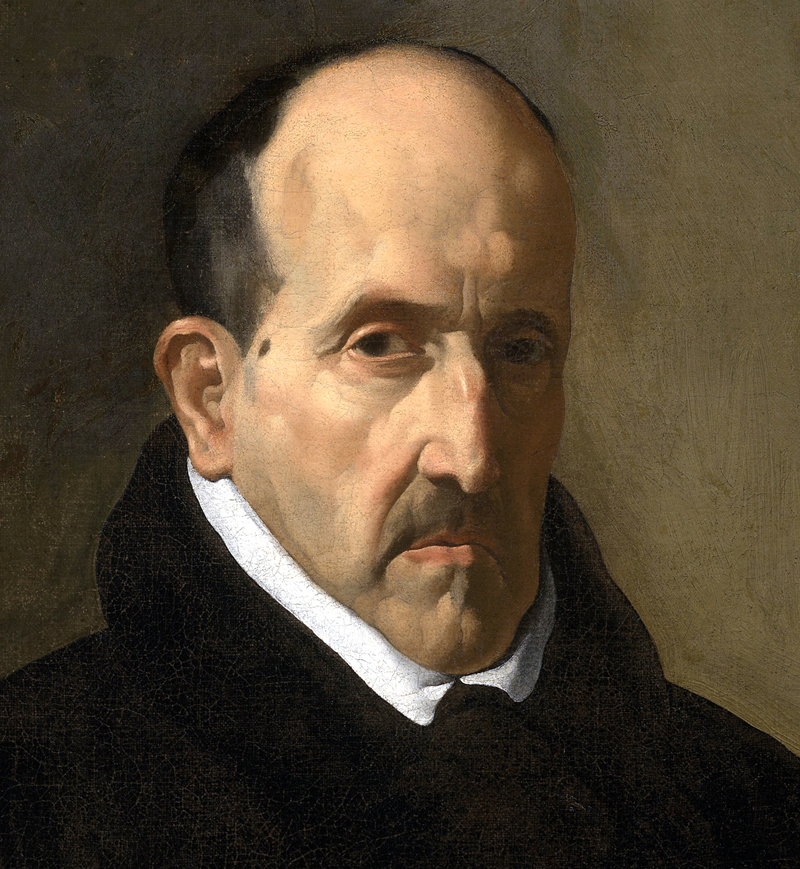
♦ Portrait of Luis de Góngora y Argote (1561-1627) ♦
Luis de Góngora y Argote was a famous Spanish poet. In 1626, he fell ill during a trip to the countryside. Afterwards, he complained that he could not remember anything about recent events, only things that had happened long ago. Overwhelmed by despair and limited in his movements, he died a year later in 1627.
♦ Diagnosis
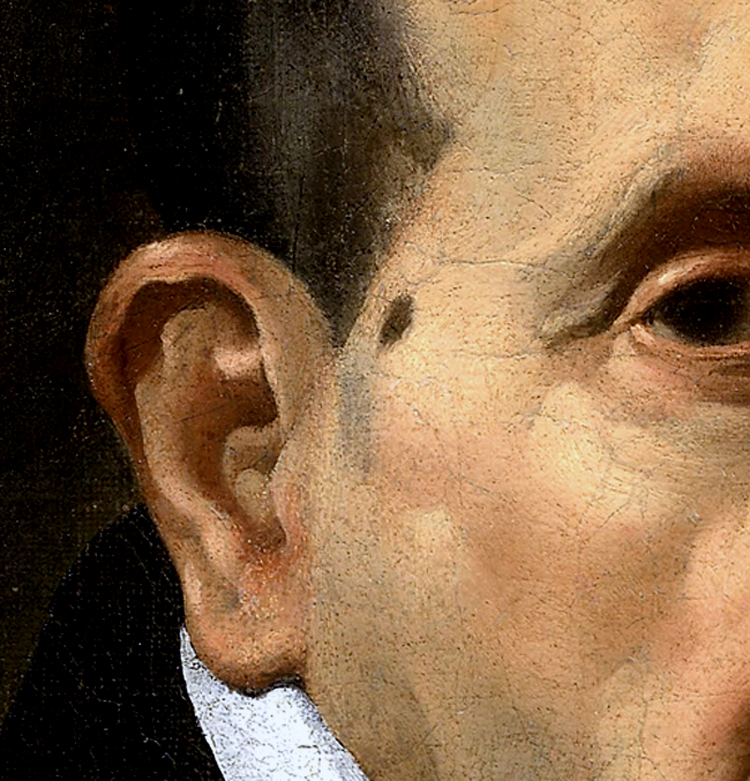
Main symptoms: Pigmented mole on the right temple.
Secondary symptoms: Poet, 60 years old, developed acute memory loss and motor problems four years later.
Clinical diagnosis: Dysplastic nevus, malignant melanoma, Melano acanthoma.
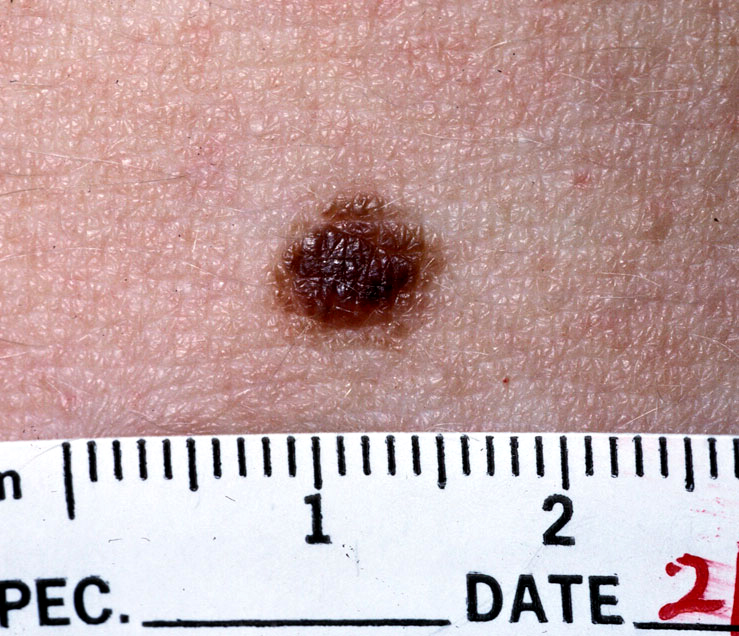
♦ Definition: nevus (birthmark)
A well-defined pigmented area or blood flow in the skin, which usually occurs shortly after birth. Also known as a birthmark.
♦ Definition: melanoma
A tumor that develops in a pigmented nevus and can become malignant with metastases. This is a transformation of the nevus into a malignant tumor.
♦ Definition: acanthoma
A growth or excessive growth in a part of the skin's prickle cell layer, such as a seborrheic wart.
♦ Discussion
Apart from its undeniable artistic and historical value, this painting by Diego Velázquez is also interesting to dermatologists because of a clearly visible pigmented skin lesion on Góngora's right temple.
Numerous dermatological diagnoses have been proposed for this lesion, including congenital nevus, dysplastic nevus, seborrheic keratosis, and melanoma. In addition, from a medical point of view, a connection between the pigmented lesion and the motor problems that affected the poet must also be considered. With the aim of testing the diagnosis of this skin lesion—albeit retrospectively—to find out whether the motor problems could be attributed to metastases in the brain caused by the pigmented lesion on the right temple, Borroni performed a morphometric computerized analysis of Góngora's mole 1).
After lung and breast cancer, melanoma is the third most common tumor to metastasize to the brain. In 12-20% of patients suffering from malignant melanoma, the brain is the first site where clinical development of metastases occurs.
The frontal lobe, cerebellum, and spinal cord are the areas most commonly affected. Compared to metastases from other malignant tumors, those from melanoma show a particular tendency to bleed (33 to 50% of cases). Worsening headaches in the forehead and mental deficits are common symptoms. The most important physical indication of metastases in the brain is a neurological defect with pyramidal signs. These are signs that relate to the central motor neurons.
According to Góngora's biography, more than a year would have passed between the appearance of pyramidal signs on March 20, 1626, and his death on May 23, 1627. This period is too long to diagnose metastases in the brain caused by malignant melanoma.
Melanomas often cause metastases in the brain, but also cerebral hemorrhages, simulating vascular accidents. All things considered, it seems more likely that Góngora suffered a simple stroke in March 1626. Furthermore, Borroni's morphometric analysis suggests a nevus rather than a melanoma.
1) Borroni G., Vignati G., Gabba P., Calligaro A., Did the Spanish poet Luis de Góngora die of metastatic malignant melanoma? Am J Dermatol 1991; 13: 91-5
Source; Jan Dequeker

Melanoma or nevus (birthmark)
References
Jan Dequeker
The artist and the doctor are looking at paintings.
Phothos wikipedia.org
wikimedia.org
Art lijst
Schilderijen
- Bosch, Hieronymus – The Peddler
- Bosch, Hieronymus_The Haywain triptych
- Botticelli, Sandro_Primavera / Spring
- Brueghel the Elder, Pieter – The Tower of Babel
- Campin, Robert — Mérode Triptych
- Courbet, Gustave_The painters Studio
- Dali, Salvadore_The Temptation of Saint Anthony
- Dou, Gerard_the Quack Doctor
- Eyck van Barthélemy_Still life with books
- Fra Angelico_Annunciation
- Géricault, Théodore_Medusas raft
- Magritte, Rene_Prohibited to depict
- Matsys, Quinten_The money changer and his wife
- Memling, Hans_Two horses in a landscape
- Picasso, Pablo_Guernica
- Rembrandt_Abraham and the Three Angels
- Rembrandt_Elsje Christiaens
- Unknown – 16th century: Four depictions of a physician
- Velazquez, Diego_Las Meninas
Schilderijen en de dokter
- Agenesia Sacrale (a rare congenital disorder in which the fetal development of the lower spine)
- Alopecia areata (hair loss)
- Arthrogryposis congenita (birth defect, joints contracted)
- Artritis psoriatica (inflammatory disease of the joint)
- Artritis reumatoïde
- Breast development (delayed)
- Bubonic plague
- Dental caries
- Diphtheria
- Extraction of the Stone of Madness
- Eye surgery
- Flat foot and Pointed Foot
- Fungal disease_Favus
- Gigantism and Acromegaly
- Goiter (struma)
- Hare lip (cheiloschisis) / cleft palate
- Herpes zoster (shingles)
- Hunger edema
- Influenza Epidemic of 1858
- Insanity - Malle Babbe (1640)
- Leprosy
- Lovesick, pregnancy
- Lymph node tumor (lymphoma), non-Hodgkin
- Manic Depression Psychosis
- Measles / Rubella? (acute viral infection)
- Melanoma or nevus (birthmark)
- Membranous glomerulonephritis
- Murder (pneumothorax, arterial bleeding)
- Neurofibromatosis
- Osteoarthritis / hallux valgus
- Osteomyelitis
- Otitis media (acute middle ear infection)
- Parotitis (mumps)
- Polio
- Prepatellar bursitis
- Progeria
- Pseudohermafroditism
- Pseudopregnancy
- Psychoneurosis (acute)
- Pulmonary tuberculosis
- Rachitic chest
- Rheumatic fever (acute)
- Rhinophyma and rosacea_depression
- Rhinophyma or bulbous nose
- Rhinoscleroma
- Syphilis (hard chancre)
- Ziekte van Paget
Schilders
Historie lijst
- 1632-1723_Antonie van Leeuwenhoek
- 1749-1823_Edward Jenner
- 1818-1865_Ignaz Semmelweis
- 1822-1895_Louis Pasteur
Wetenswaardigheden lijst
- 1887 Psychiatric Hospital
- Animals on duty
- Bizarre advice for parents
- Bloodletting
- Bloodthirsty Hungarian Countess Elizabeth Báthory (1560–1614)
- Butler escaped punishment three times.
- Dance mania / Saint Vitus Dance
- Doctors’ advice did more harm than good
- French Revolution Louis XVI
- Frontal syndrome (Phineas Gage)
- Heart disease (Egyptian princess)
- Ice Age (minor)_1300-1850
- Ivan IV de Verschrikkelijke (1530-1584)
- Kindermishandeling
- Koketteren met koningin Victoria
- Koningin door huidcrème vergiftigd
- Kraambedpsychose (Margery Kempe)
- Massacre in Beirut
- ME stonden bol van de seks
- Mummie bij de dokter
- Plee, Gemak of Kakstoel
- Prostaatkanker (mummie)
- Sexhandel in Londen
- Swaddling baby
- Syfilis was in de mode
- Testikels opofferen
- Tropische ziekten werden veroveraars fataal
- Vrouwen als beul in WOII
- Wie mooi wil zijn moet pijn lijden
- Zonnekoning woonde in een zwijnenstal