.jpg)
.jpg)
Diego Velazquez (1599-1660)
♦ The first modern painting
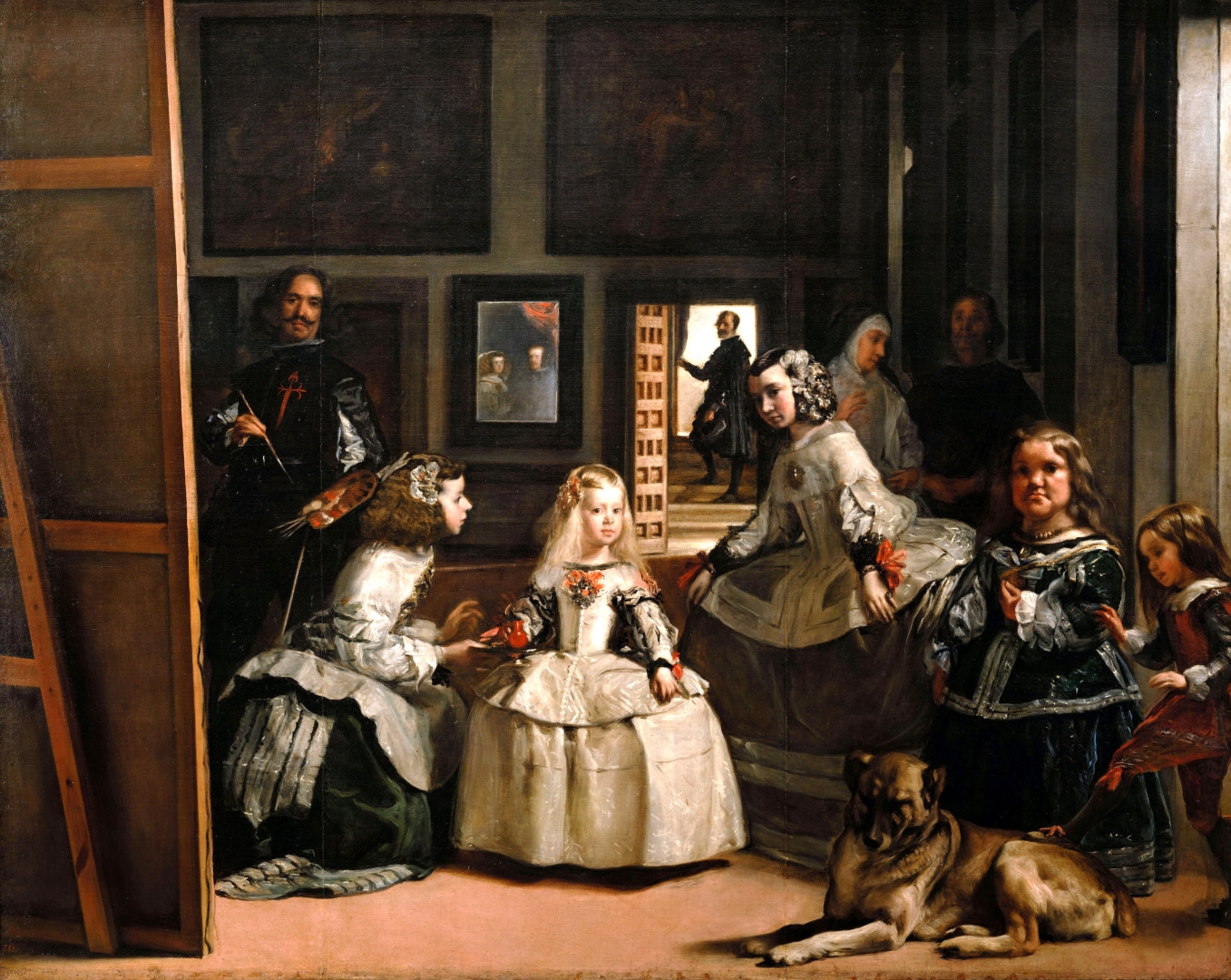
The magnificent and unusual family portrait *Las Meninas* is Diego Velázquez’s most famous and most talked-about work.
The painting, which was created in 1656, depicts an interesting period from the 17th century and is still frequently studied by artists, students, and critics today. It is impossible to uncover the true meaning behind *Las Meninas*, and this was likely Velázquez’s intention as well. The painting raises many questions but offers no answers, leaving it up to the viewer to decide for themselves what the painting’s meaning and intentions are.
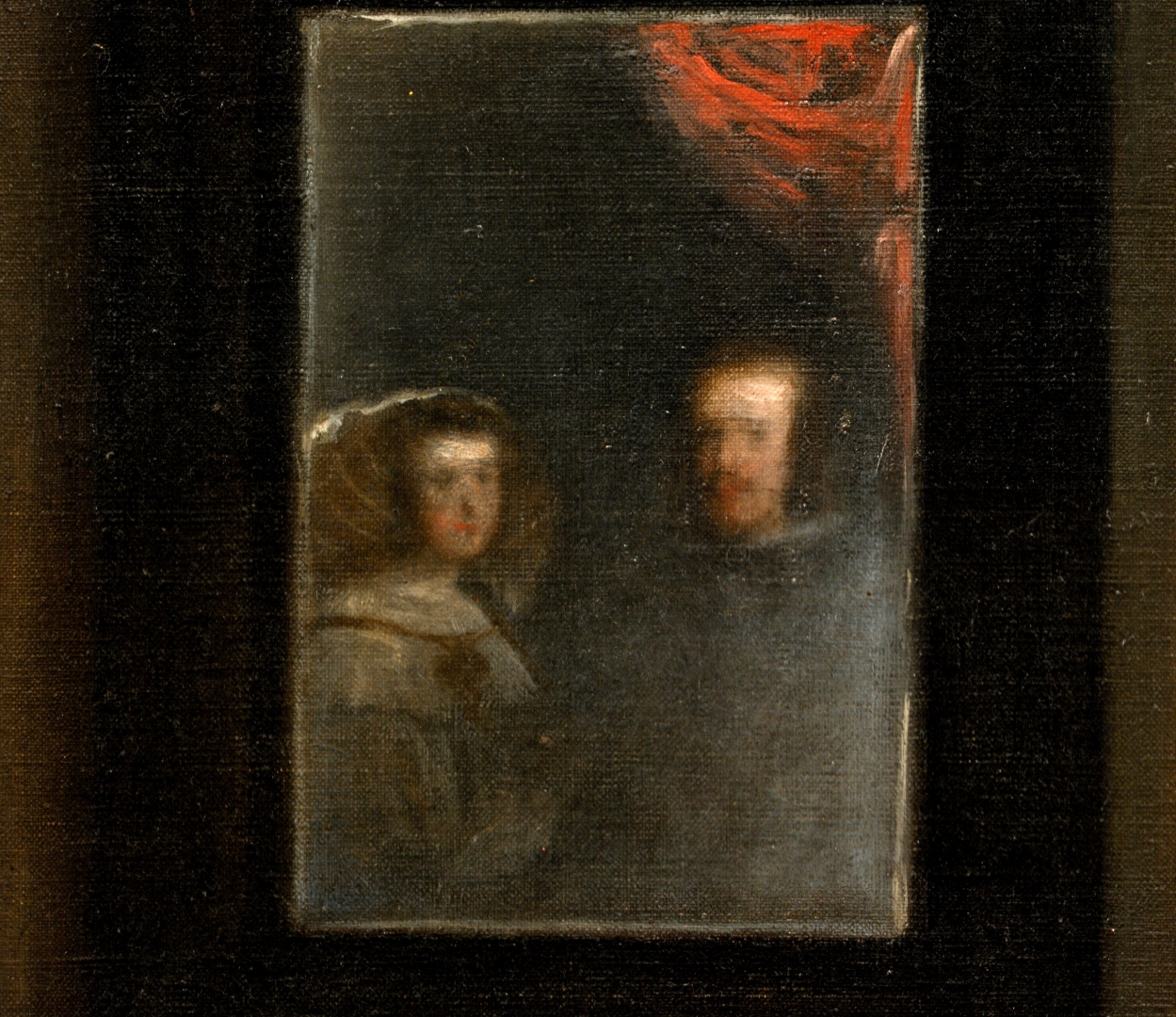
If we’re going to try to interpret the painting, we’ll start with the mirror in the background.
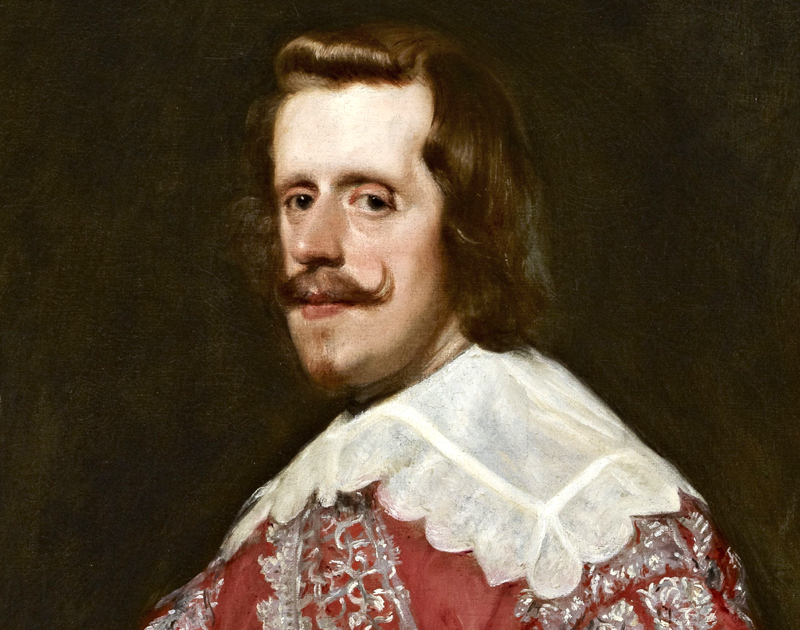
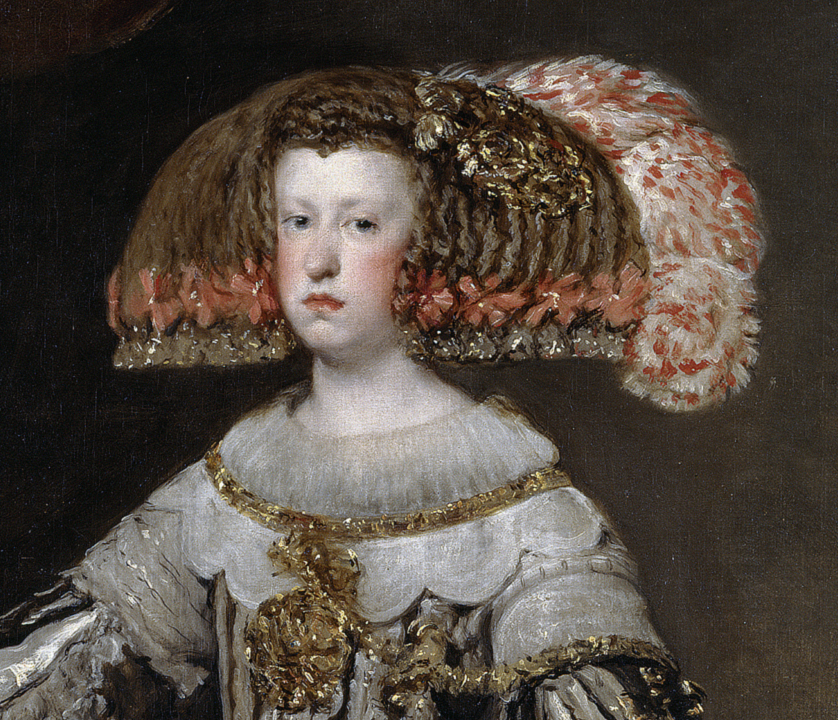
- In it, we see the royal couple posing.
- On the left is the painter Velázquez himself, working on a huge canvas.
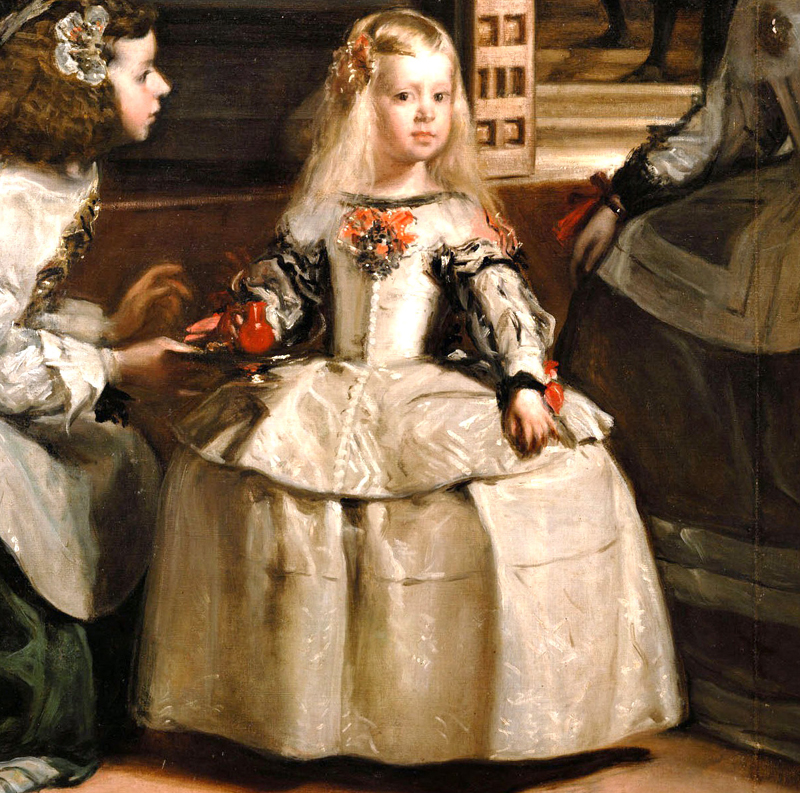
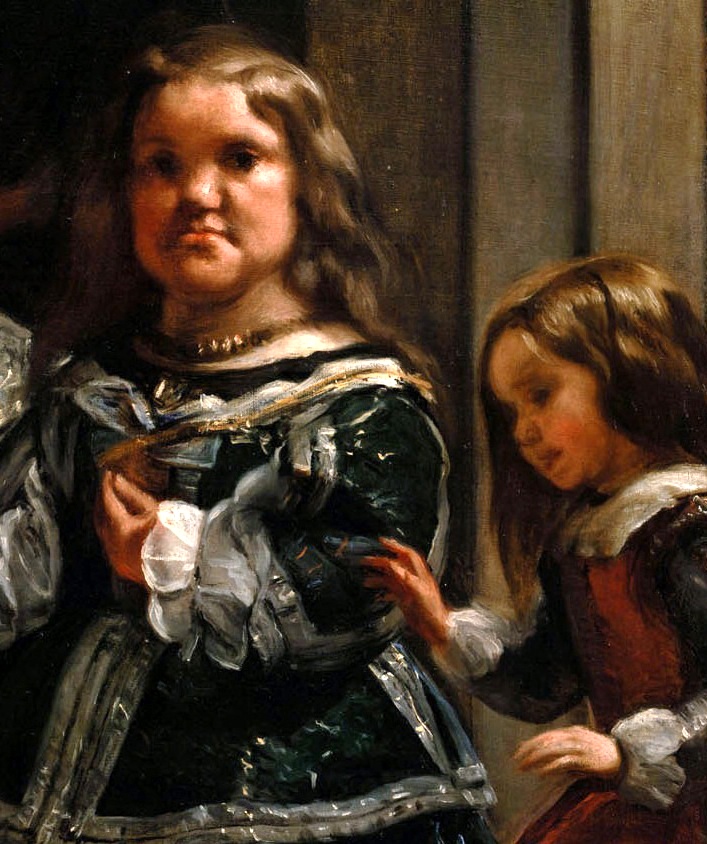
- The girl in the hoop skirt at the front, the five-year-old Infanta Margarita, daughter of Philip IV, takes center stage. She appears to be watching her parents pose. Margarita is accompanied by two young ladies-in-waiting (las meninas). The seemingly informal nature of this painting was unprecedented in court art, especially on a canvas of this size.
♦ Las Meninas ♦
It is a timeless painting because Velázquez tackled a subject that continues to fascinate the public. He broke with the conventions of traditional portraiture and gives us a glimpse “behind the scenes” of the royal court. No one wants to miss the chance to take a peek inside the royal private quarters.
Royal portraits from that period were typically rather stiff and formal; the subjects had stern expressions, and the background was always monotonous.
Velázquez, however, broke with this tradition to show the world the everyday life at the palace of Philip IV of Spain. Velázquez also wanted to make the royal family seem a little more human, as if they were just like any other family.
At first glance, the five-year-old La Infanta Margarita stands out, surrounded by her maids (or meninas), the family dog, and two dwarf-like attendants. Although the focus is primarily on La Infanta Margarita, Velázquez proves once again that anyone—including those who normally work “behind the scenes”—can be painted. This is further emphasized by the painting’s title, Las Meninas.
- To the left of Margarita stands Velázquez himself, standing before a huge canvas with a brush and palette in hand, thereby asserting himself as an artist.
♦ However, there is more to it than that.
The most interesting thing about this painting is that Velázquez chose to depict only a blurred reflection of the king and queen. Here, Velázquez makes skillful use of perspective, making this section less clear. This deliberate ambiguity raises many questions. Most importantly: who is Velázquez painting on that enormous canvas?
Some critics argue that he is painting the scene to his left, featuring La Infante Margarita and her “Meninas,” and that the parents—the King and Queen of Spain—are standing at a distance, watching their daughter. However, this would mean that Velázquez is painting the young princess from behind, which is rather unusual for a painting.
Another possibility is that Velázquez is painting King Philip IV and his wife, Mariana of Austria, since they are standing in front of him. Margarita is simply looking at her parents. Velázquez may have had several reasons for placing the couple so far apart. For example, Philip IV did not particularly enjoy being painted in his later years, and he may have commissioned it. Or is Velázquez using his position as a chamberlain here to play a power game? Was it an expression of self-importance to place himself at the forefront of the painting and depict the royal couple only as a reflection? Or is this yet another attempt by Velázquez to make Philip and Mariana appear more human and to make the ordinary people who would see the painting feel better?
These are all questions that everyone is free to answer for themselves after admiring *Las Meninas*. That is likely how Velázquez intended it, and that is also what makes it such a magnificent and impressive work of art.
♦ What exactly is modern art?
This painting illustrates the difference between the classical and modern eras. Art matures as it begins to reflect, and that “reflection” is evident in the painting.
Contemporary art explores how we see and perceive the world.
Postmodern art reflects on modern art—on how we used to view it and how we view it now. It explores how history shapes our perspective.
“Las Meninas” by Velázquez is the first modern painting. Why? What exactly is so “modern” about the painting?
Because the image itself depicts what characterizes the Modern Age: we start to think about everything, that’s what we call “reflecting.” And that “reflection” (as in thinking) can be beautifully depicted through “reflections” (as in mirror images).
What’s more, as a viewer, you too are drawn into the scene, alongside the living subjects in the painting, the king and queen who are not depicted, and the artist himself, who appears twice in the work. It is, therefore, a fascinating painting.
♦ Analysis of Las Meninas
The “reflections” within the painting.
[1] The artist is looking at you; you are the viewer. The same is true of many other figures in the painting.
[2] In the mirror, you see “yourself,” but that's not you: here stand the king and the queen.
[3] The image in the mirror is presumably also present on the canvas the artist is working on.
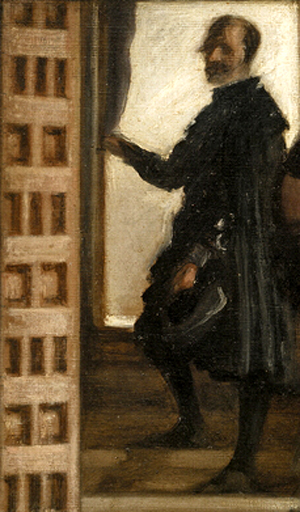
[4] The artist stands once again in the doorway, this time as the one who can survey the entire scene. Others have recognized Jose Nieto here, or perhaps a reference to the “lame devil.”
♦ Infanta Marguarita
A detail from the painting *The Princess*; “Infanta Marguarita” has just entered the courtroom. She looks at her father and mother as if responding to the admonishing look from one of them: “Just stay calm, okay?”
In a mirror on the back wall, Velázquez has depicted the models who were actually standing before him. You can tell the King and Queen of Spain apart by their clothing.
The Art of Seeing
14th–18th Centuries
Patrick de Rijnck

Velazquez, Diego_Las Meninas
References
The Art of Seeing
14th–18th Centuries
Patrick de Rijnck
Intranet
Photos
wikipedia