
.JPG)
.jpg)
.jpg)
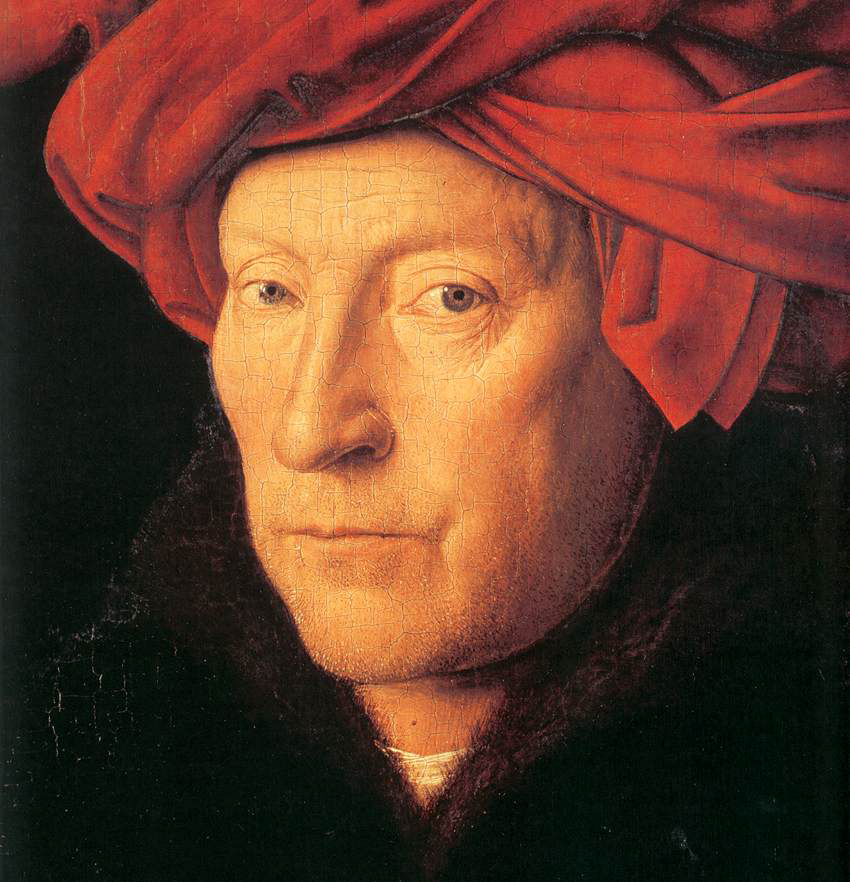
Jan van Eyck
1390, Maaseik – July 19, 1441, Ghent, Belgium
Jan van Eyck was a Flemish painter who perfected the newly developed oil painting technique.
His naturalistic panel paintings, mainly portraits and religious subjects, are abundantly dotted with hidden religious symbols.
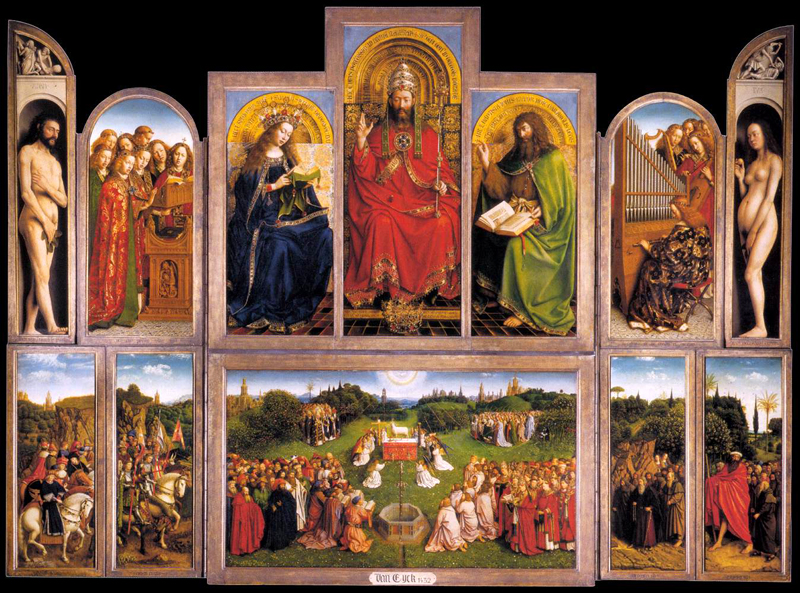
His masterpiece is the altarpiece The Adoration of the Mystic Lamb, created for Ghent Cathedral.
According to some, Hubert van Eyck, Jan's brother, began the painting.
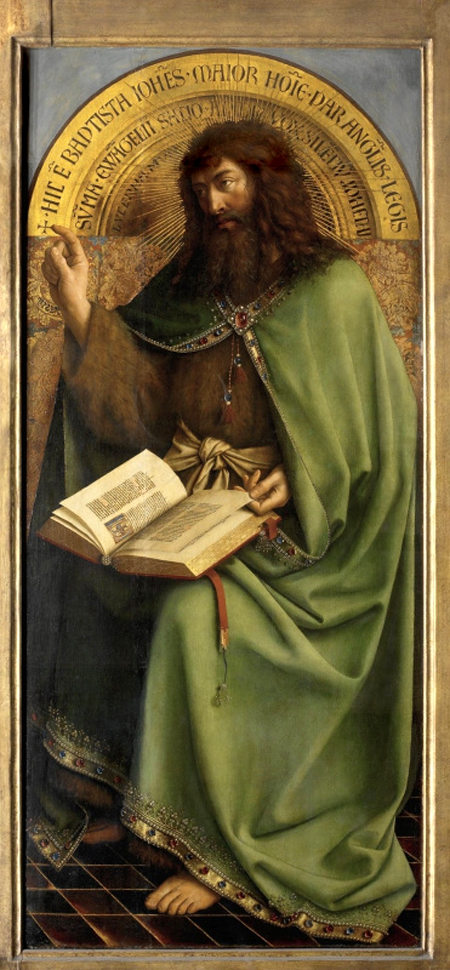
♦ Panel of Saint John the Baptist from the Ghent Altarpiece ♦
Saint John the Baptist is holding a large prayer book and, judging by the position of his right hand, he is teaching.
He has long brown hair and a luxuriant beard. Over his shepherd's clothes, he wears a green church robe richly decorated with pearls and precious stones.
♦ Diagnosis
Key symptoms: Bony Heberden's node on the thumb
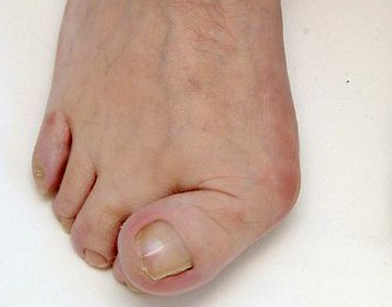
Additional symptoms: Middle-aged man with slight valgus deformity of the left big toe.
Clinical diagnosis: Osteoarthritis of the hand
♦ Definition: osteoarthritis of the hand
Osteoarthritis of the hand is an age-related degenerative joint disease that can have multiple causes.
The condition leads to cartilage loss and limited bone supply.
Bone spurs are also associated with general osteoarthritis.
♦ Definition: X-toe or hallux valgus
An X-toe is an outward displacement of the big toe as a side effect of osteoarthritis of the foot.
♦ Discussion
The swollen lumps on the DIP joint of the thumb, which we call Herberden's nodes, are painted very realistically.
Similar to the fingers of a contemporary patient with osteoarthritis of the hand.
Osteoarthritis of the hand is usually associated with osteoarthritis of other joints, such as the big toe, which then results in a valgus position, or the knee and spine.
That is why these bumps are also considered to be signs of general osteoarthritis.
William Heberden Sr. (1710-1801) was an English physician who described these swollen nodules on the small joints of the hands.
♦ Osteoarthritis
of the hand is an indication of predisposition to general osteoarthritis. The condition is common, runs in families, and is often associated with a robust physique. The nodules are painful when they first appear around the age of 50 (menopause in women), but once they are fully grown and hard, the pain disappears. Patients mainly complain about the unsightly appearance.
Patients with osteoarthritis of the hand joints are more often obese or robustly built than others. Because they generally have more bone mass, they are less prone to fractures due to osteoarthritis.
An X-toe or hallux valgus with stretching of the first joint between the toe and foot (metatarsophalangeal joint) is the equivalent of Heberden's nodes on the hand.
It is one of the most important markers of osteoarthritis and is very common in older people.
X-toes can cause problems when wearing shoes or walking.
Jan Dequeker
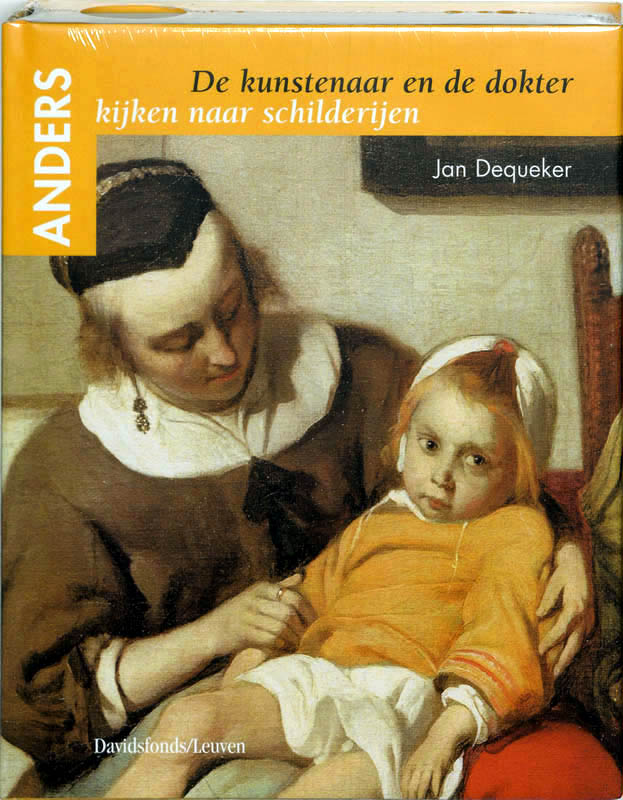
The artist and the doctor look at paintings

Osteoarthritis / hallux valgus
References
Jan Dequeker
The artist and the doctor look at paintings
Photos
wikipedia.org
wikimedia.org