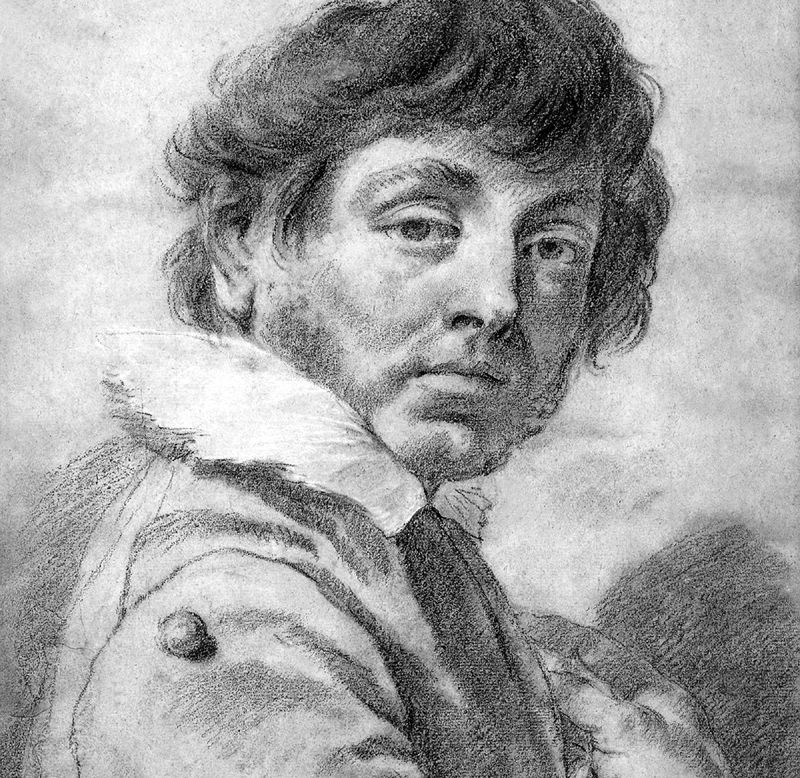
Giovanni Battista Crespi, genaamd Il Cerano
1557, Novara - October 23, 1632, Milan, Italy
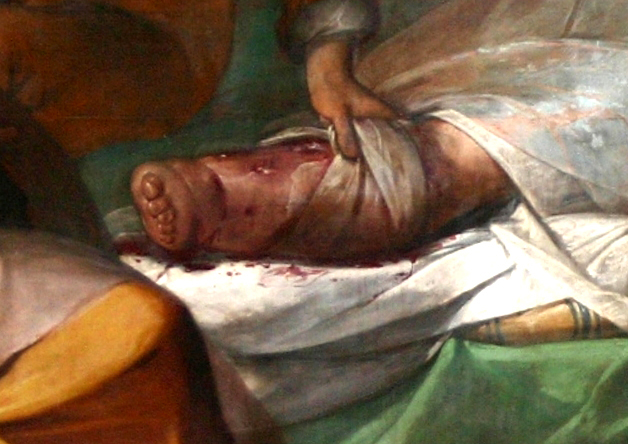
♦ Painting from the series Miracles of Saint Charles Borromeo ♦
Saint Charles Borromeo (1538-1584) was appointed Cardinal Archbishop of Milan in 1560 by his uncle, the newly elected Pope Pius IV. He held this position until his death in 1584. Charles was one of the great reformers of the Church. He served at the Council of Trent and then worked in his diocese to implement the reforms requested by this council. He worked tirelessly for the poor, especially after the plague broke out in Milan.
He spent his entire fortune, which was by no means insignificant, on the poor.
♦ Diagnosis:
Main symptoms: Edema of the lower leg, ulcer, purulent fistula, unpleasant odor
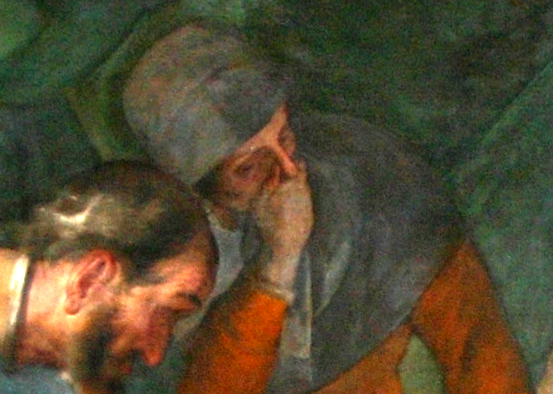
Secondary symptoms: Young adult woman, good general health, nursing assistant pinches her nose shut
Clinical diagnosis: Chronic osteomyelitis, Brodie's abscess
♦ Definition: osteomyelitis
Inflammation of the bone marrow
♦ Discussion:
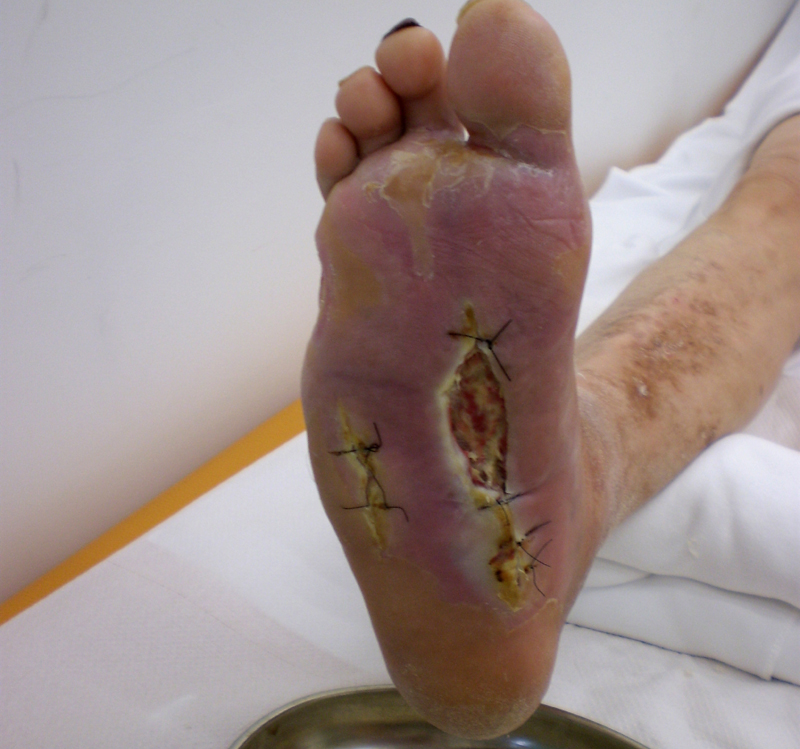
Chronic osteomyelitis is a consequence of acute osteomyelitis: the infection persists and chronic suppurating fistulas develop as a result of dead tissue. A subacute or chronic abscess can also spread to another bone or can develop immediately as a chronic infection.
Such an abscess, known as Brodie's abscess, is usually found at the ends of long bones, where we see an unmistakable thickening of the bone.
X-rays reveal a central area where the bone is thinned and, more or less surrounding it, a hardening with new bone formation and sometimes with dead tissue in the cavity. Recurrence of the infection is common in chronic osteomyelitis.
Such an abscess, known as Brodie's abscess, is found Extensive surgery to remove the dead tissue is an important part of successful treatment. In the past, amputation was often unavoidable. Dead bone tissue (known as sequestration/dead tissue) in the inflamed area is sometimes only expelled many years after the acute inflammation and often leaves behind fistulas. These open drainage channels naturally become severely infected with all kinds of bacterial flora and foul-smelling pus.
Hollander diagnoses osteomyelitis based on a Berlin copy of this painting by Simon Vouet.
Roberto Margotta suggested gangrene of the foot as a diagnosis based on the same print, copied from the series Miracles of Saint Carrolus Borromeus in Milan Cathedral.
Source: Jan Dequeker
♦ Osteomyelitis
♦ The causes
There are two forms of osteomyelitis, acute and chronic.
- The acute form is usually the result of an infection with Staphylococcus aureus.
It normally lives on the skin without causing any harm, but can enter the bloodstream and infect bone tissue as a result of a wound, fracture, joint replacement, or injection into a blood vessel with a contaminated needle.
- In the chronic form, the patient experiences intermittent symptoms over many years. Amputation is sometimes necessary, especially in patients with diabetes or poor circulation. When an infection occurs after surgery in which the patient has received an artificial joint, the prognosis depends on the type of infection, the possibility of safely removing the artificial joint, and the patient's overall health.
♦ Sometimes acute osteomyelitis progresses to the chronic form.
♦ Diagnosis
If the doctor suspects that you have osteomyelitis, he or she may order an X-ray, scintigraphy, or MRI scan to locate the affected bone.
If pus has formed, a sample may be taken from the bone using a fine needle so that the causative agent can be identified.
♦ Treatment
Treatment of osteomyelitis involves determining the causative organism and then treating it with an antibiotic that is effective against that organism, administered intravenously. If the osteomyelitis is caused by another infection and tissue has died, surgery is often necessary to remove the dead tissue. Drainage of abscesses is also often necessary. Sometimes, antibiotic beads are left in the wound to maintain a high concentration of the antibiotic at the site for a long period of time.Treatment of osteomyelitis proceeds after determining the causative organism by treatment with a drug specific to that organism. .
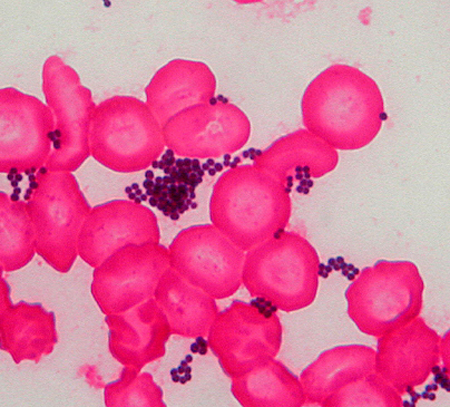
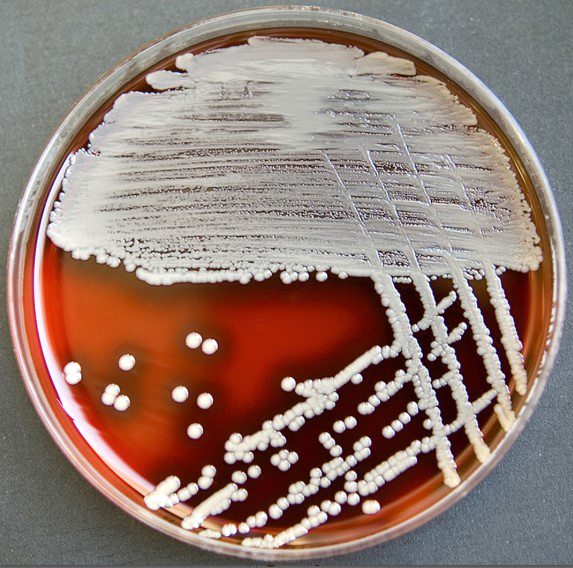
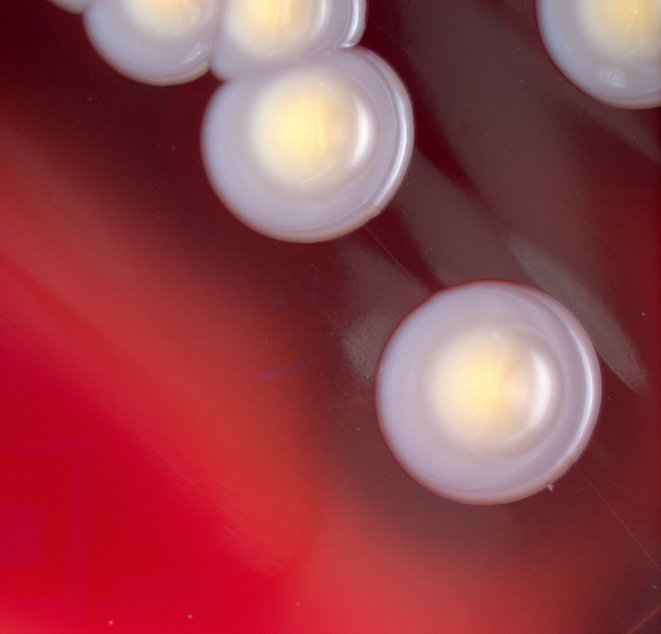
♦♦ Staphylococcus aureus
- Microscopic: Gram-positive cocci in clusters
- Culture: after 48 hours, large, smooth, usually hemolytic and yellow colony

Osteomyelitis
References
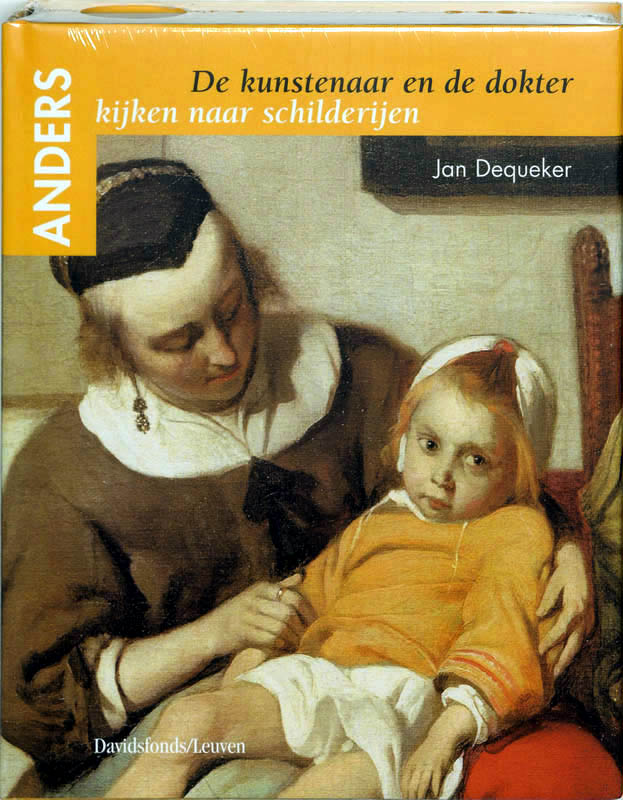
Jan Dequeker
The artist and the doctor
Loes van Damme
Medische Microbiologie en Infectieziekten
ErasmusMC_Rotterdam
Photos
wikimedia.org
.jpg)
Art lijst
Schilderijen
- Bosch, Hieronymus – The Peddler
- Bosch, Hieronymus_The Haywain triptych
- Botticelli, Sandro_Primavera / Spring
- Brueghel the Elder, Pieter – The Tower of Babel
- Campin, Robert — Mérode Triptych
- Courbet, Gustave_The painters Studio
- Dali, Salvadore_The Temptation of Saint Anthony
- Dou, Gerard_the Quack Doctor
- Eyck van Barthélemy_Still life with books
- Fra Angelico_Annunciation
- Géricault, Théodore_Medusas raft
- Magritte, Rene_Prohibited to depict
- Matsys, Quinten_The money changer and his wife
- Memling, Hans_Two horses in a landscape
- Picasso, Pablo_Guernica
- Rembrandt_Abraham and the Three Angels
- Rembrandt_Elsje Christiaens
- Unknown – 16th century: Four depictions of a physician
- Velazquez, Diego_Las Meninas
Schilderijen en de dokter
- Agenesia Sacrale (a rare congenital disorder in which the fetal development of the lower spine)
- Alopecia areata (hair loss)
- Arthrogryposis congenita (birth defect, joints contracted)
- Artritis psoriatica (inflammatory disease of the joint)
- Artritis reumatoïde
- Breast development (delayed)
- Bubonic plague
- Dental caries
- Diphtheria
- Extraction of the Stone of Madness
- Eye surgery
- Flat foot and Pointed Foot
- Fungal disease_Favus
- Gigantism and Acromegaly
- Goiter (struma)
- Hare lip (cheiloschisis) / cleft palate
- Herpes zoster (shingles)
- Hunger edema
- Influenza Epidemic of 1858
- Insanity - Malle Babbe (1640)
- Leprosy
- Lovesick, pregnancy
- Lymph node tumor (lymphoma), non-Hodgkin
- Manic Depression Psychosis
- Measles / Rubella? (acute viral infection)
- Melanoma or nevus (birthmark)
- Membranous glomerulonephritis
- Murder (pneumothorax, arterial bleeding)
- Neurofibromatosis
- Osteoarthritis / hallux valgus
- Osteomyelitis
- Otitis media (acute middle ear infection)
- Parotitis (mumps)
- Polio
- Prepatellar bursitis
- Progeria
- Pseudohermafroditism
- Pseudopregnancy
- Psychoneurosis (acute)
- Pulmonary tuberculosis
- Rachitic chest
- Rheumatic fever (acute)
- Rhinophyma and rosacea_depression
- Rhinophyma or bulbous nose
- Rhinoscleroma
- Syphilis (hard chancre)
- Ziekte van Paget
Schilders
Historie lijst
- 1632-1723_Antonie van Leeuwenhoek
- 1749-1823_Edward Jenner
- 1818-1865_Ignaz Semmelweis
- 1822-1895_Louis Pasteur
Wetenswaardigheden lijst
- 1887 Psychiatric Hospital
- Animals on duty
- Bizarre advice for parents
- Bloodletting
- Bloodthirsty Hungarian Countess Elizabeth Báthory (1560–1614)
- Butler escaped punishment three times.
- Dance mania / Saint Vitus Dance
- Doctors’ advice did more harm than good
- French Revolution Louis XVI
- Frontal syndrome (Phineas Gage)
- Heart disease (Egyptian princess)
- Ice Age (minor)_1300-1850
- Ivan IV de Verschrikkelijke (1530-1584)
- Kindermishandeling
- Koketteren met koningin Victoria
- Koningin door huidcrème vergiftigd
- Kraambedpsychose (Margery Kempe)
- Massacre in Beirut
- ME stonden bol van de seks
- Mummie bij de dokter
- Plee, Gemak of Kakstoel
- Prostaatkanker (mummie)
- Sexhandel in Londen
- Swaddling baby
- Syfilis was in de mode
- Testikels opofferen
- Tropische ziekten werden veroveraars fataal
- Vrouwen als beul in WOII
- Wie mooi wil zijn moet pijn lijden
- Zonnekoning woonde in een zwijnenstal